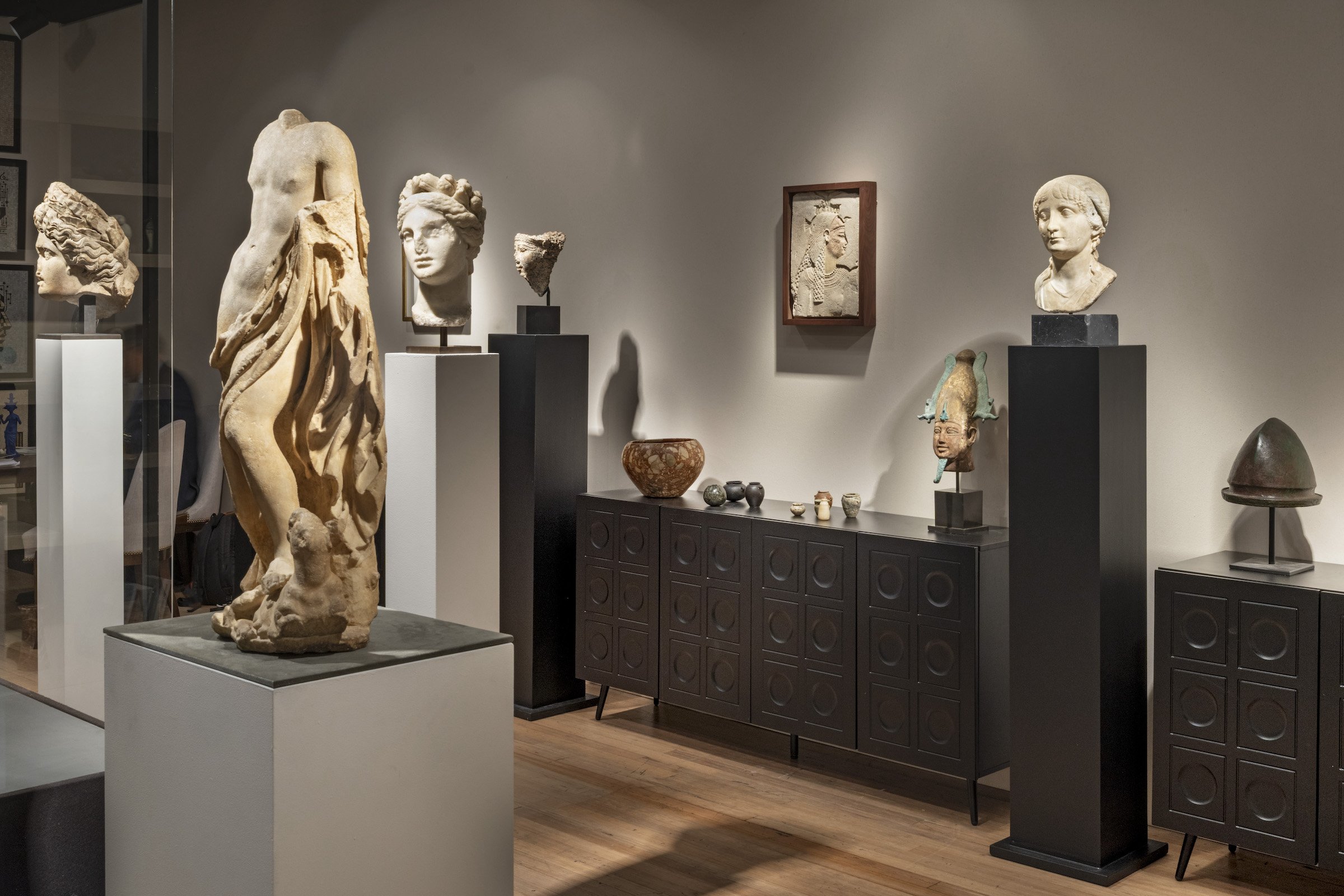
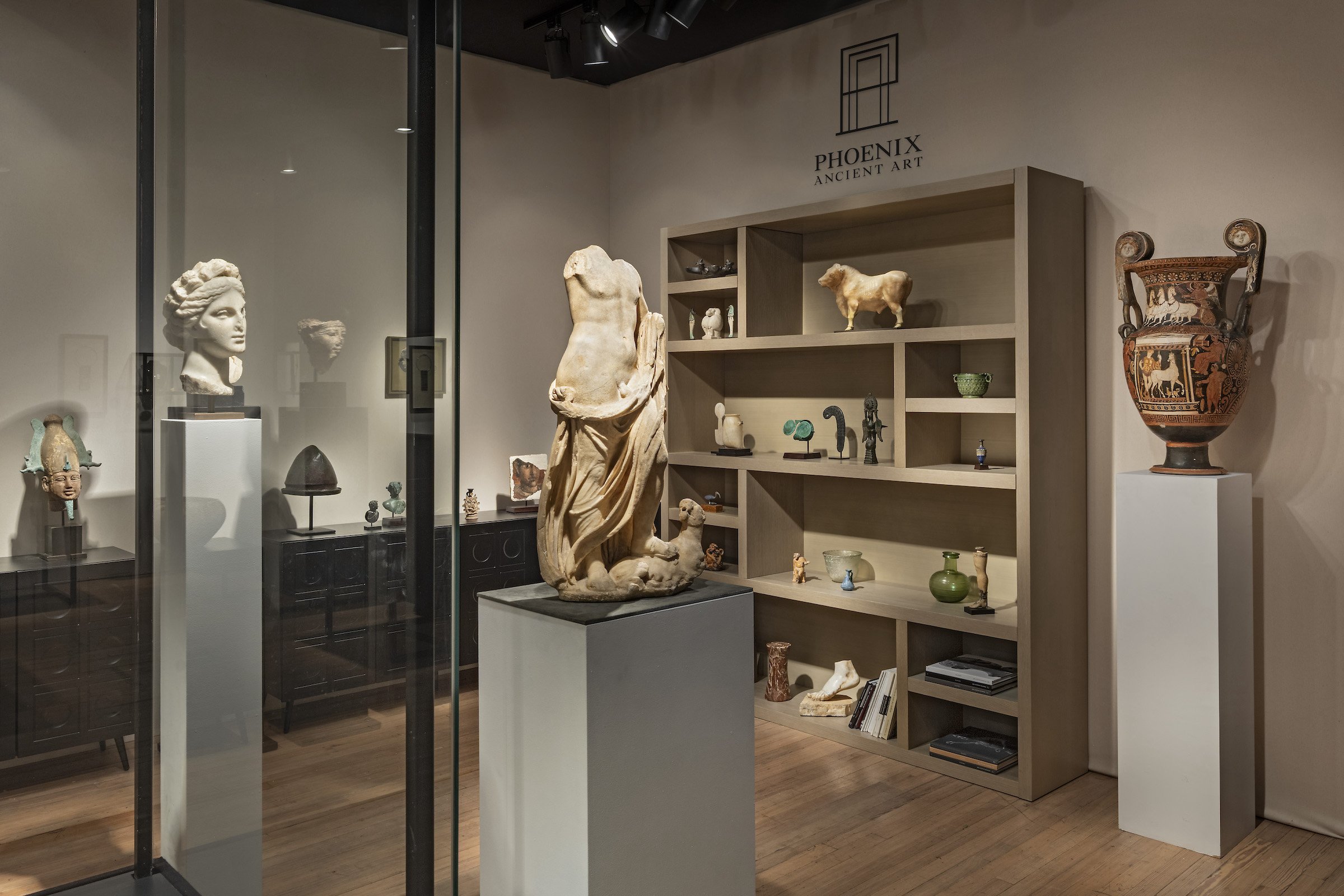
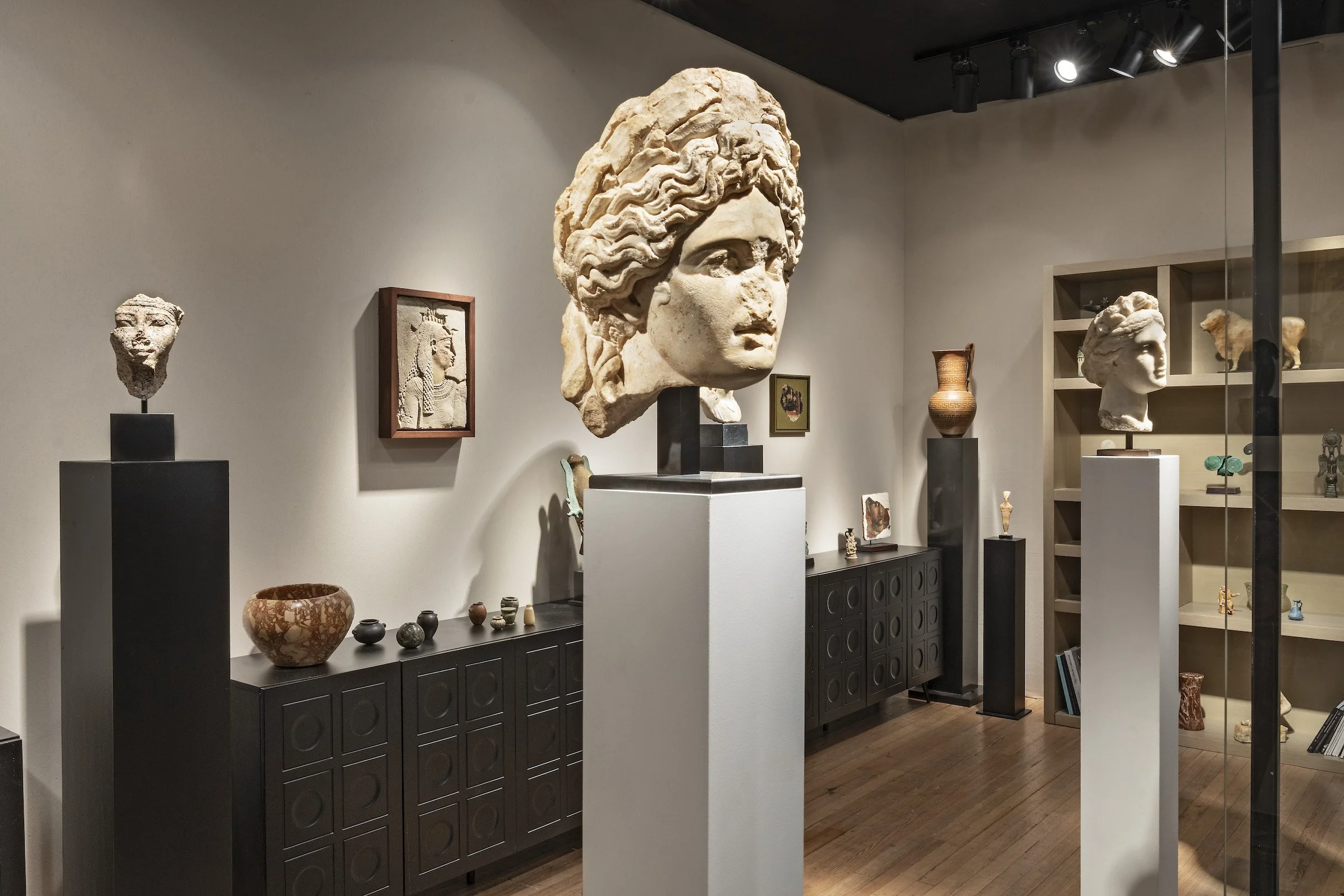
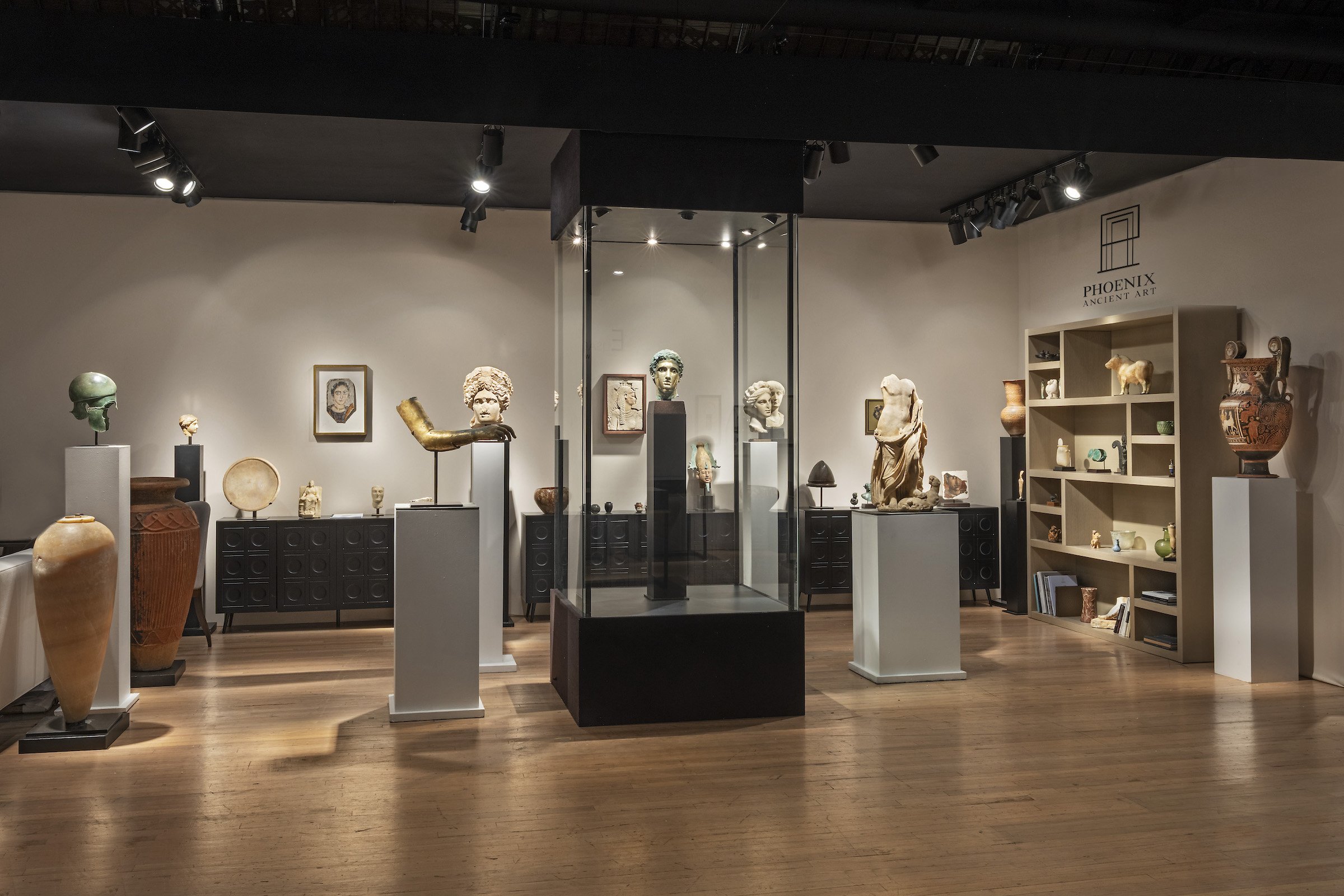
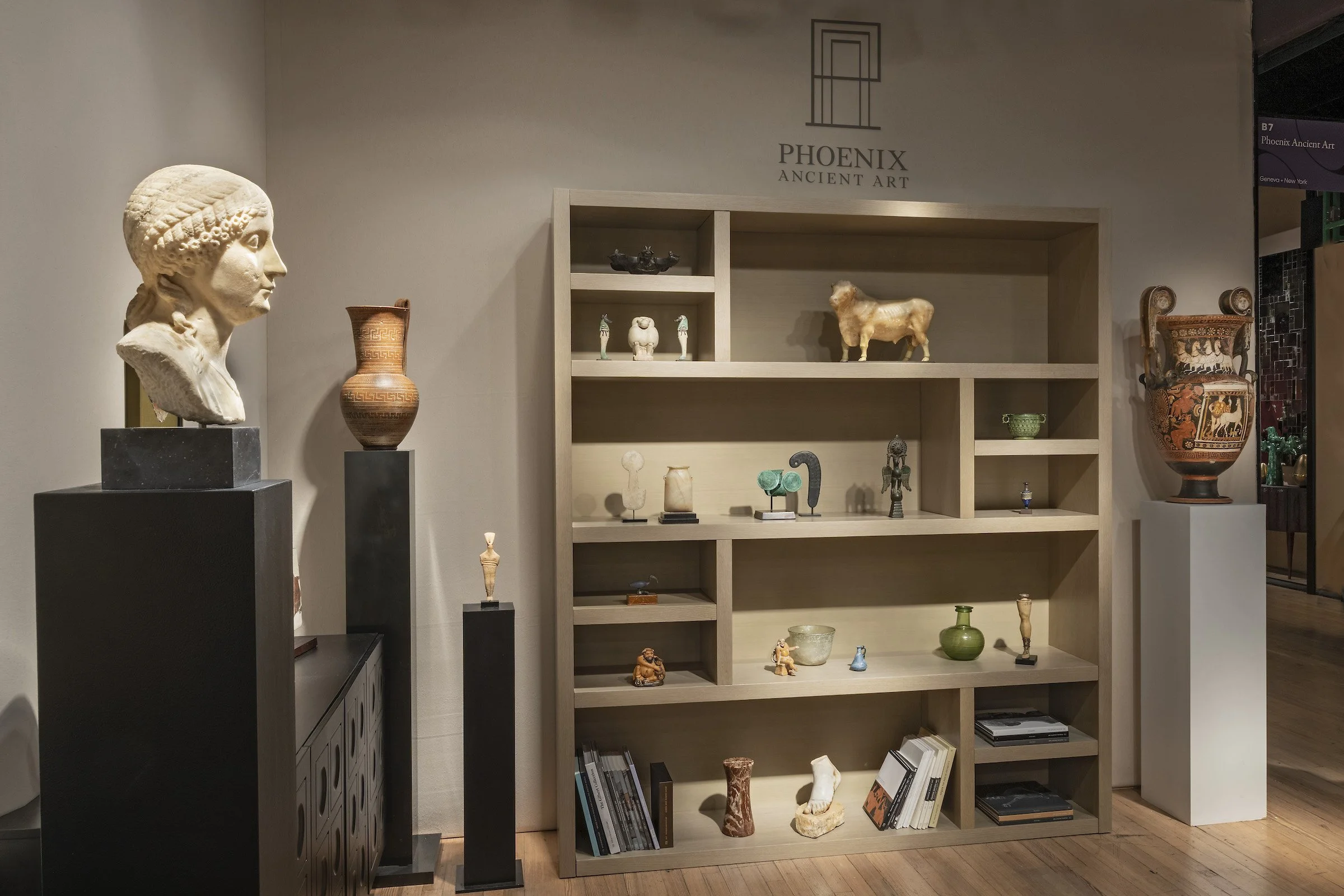
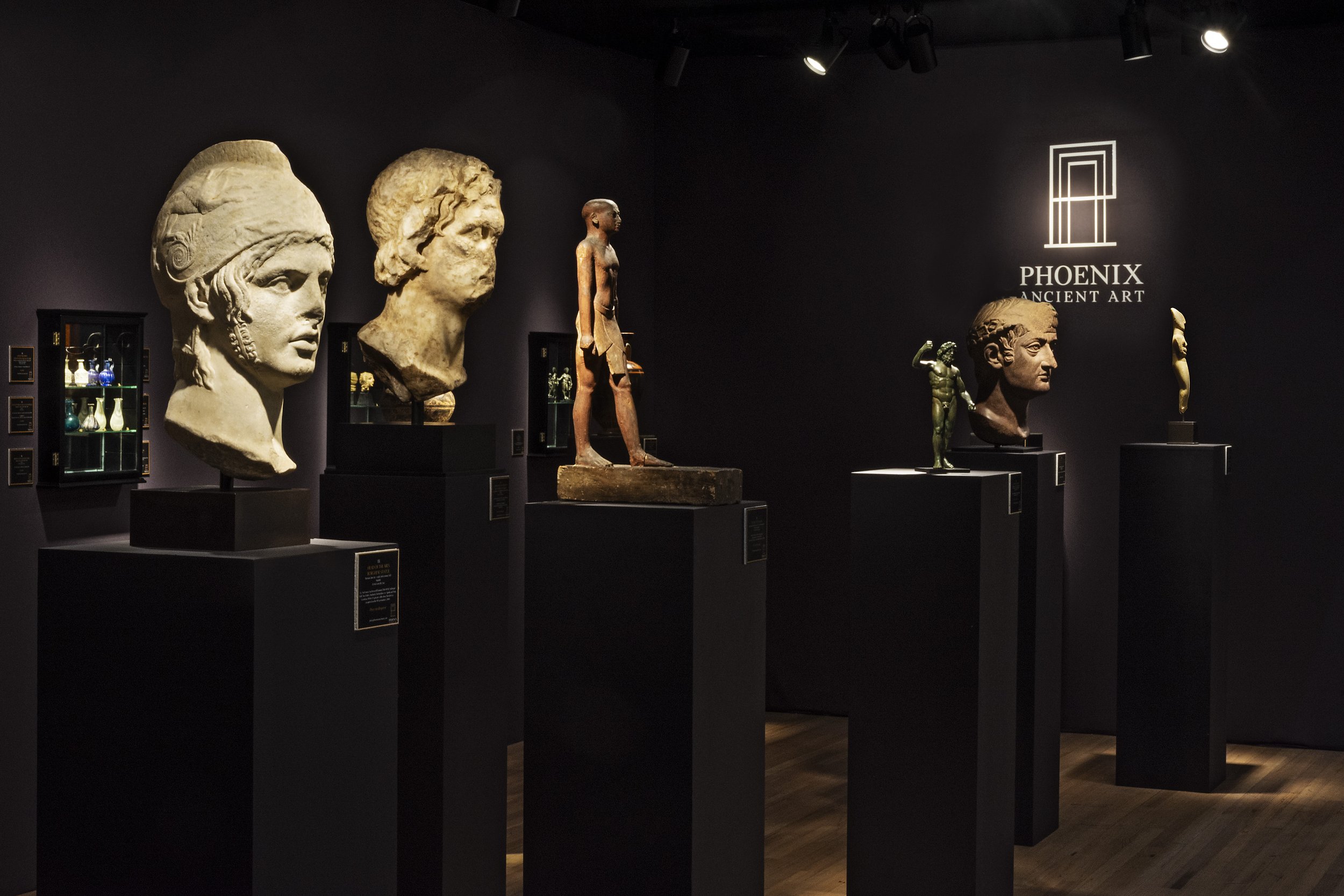
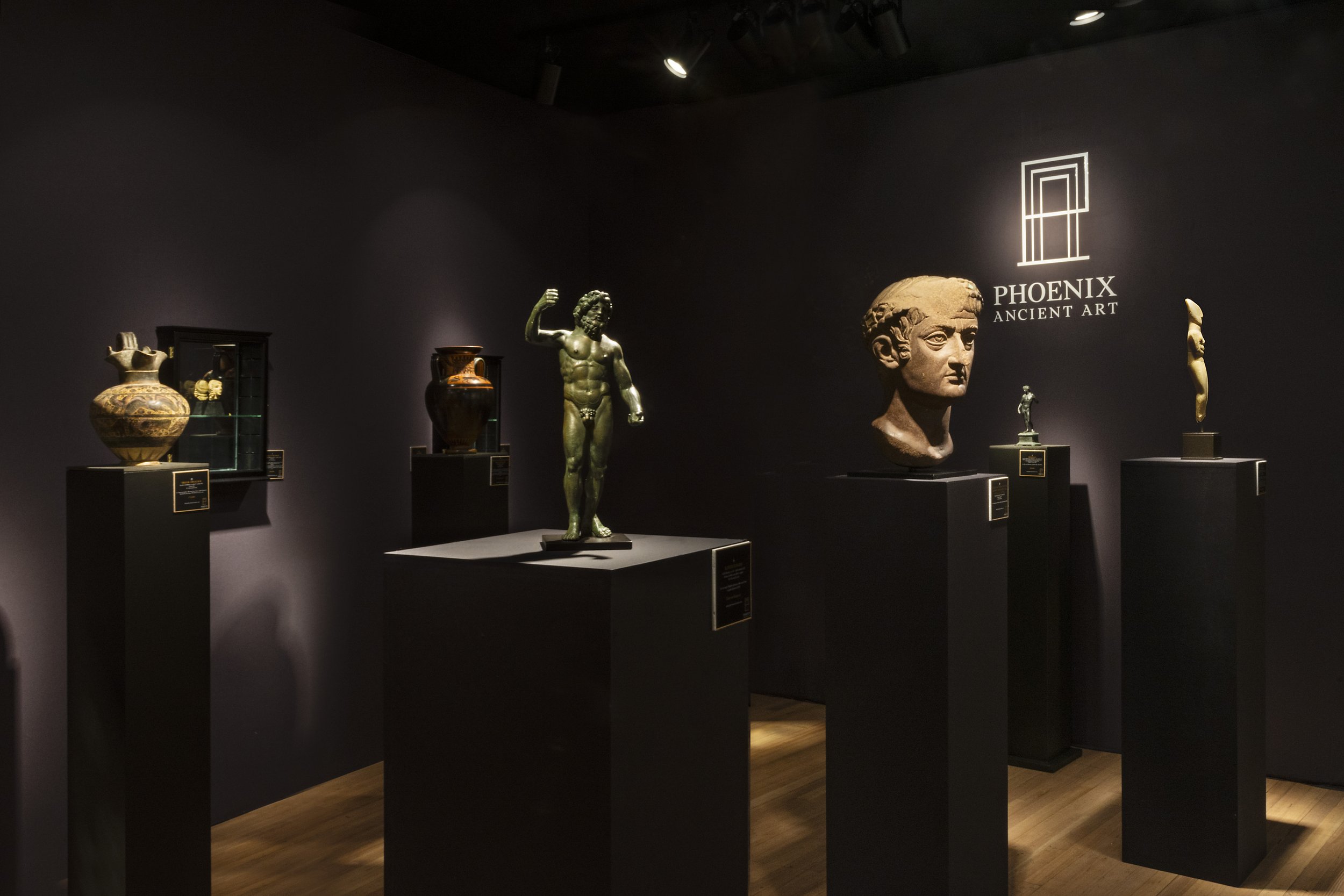
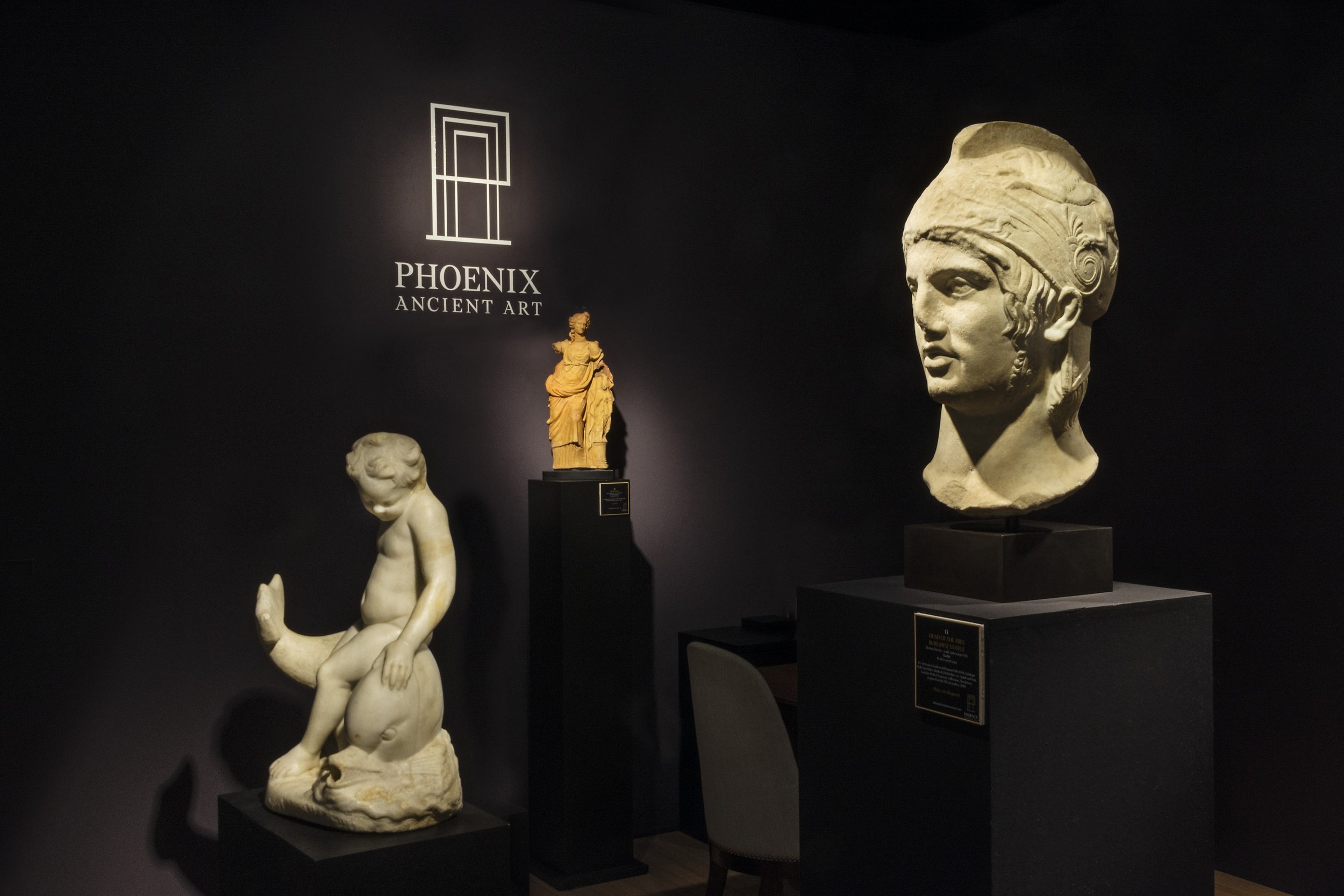
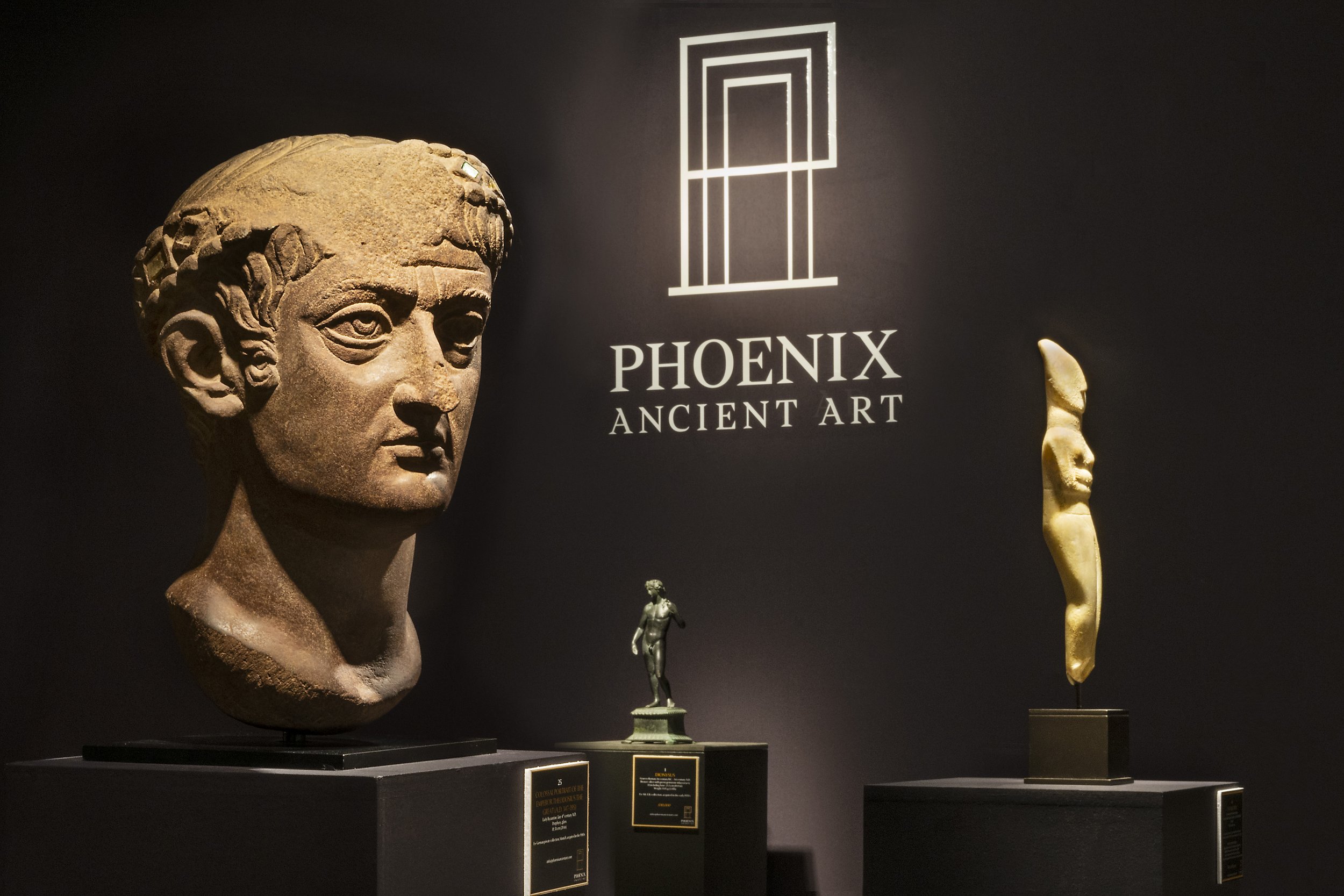
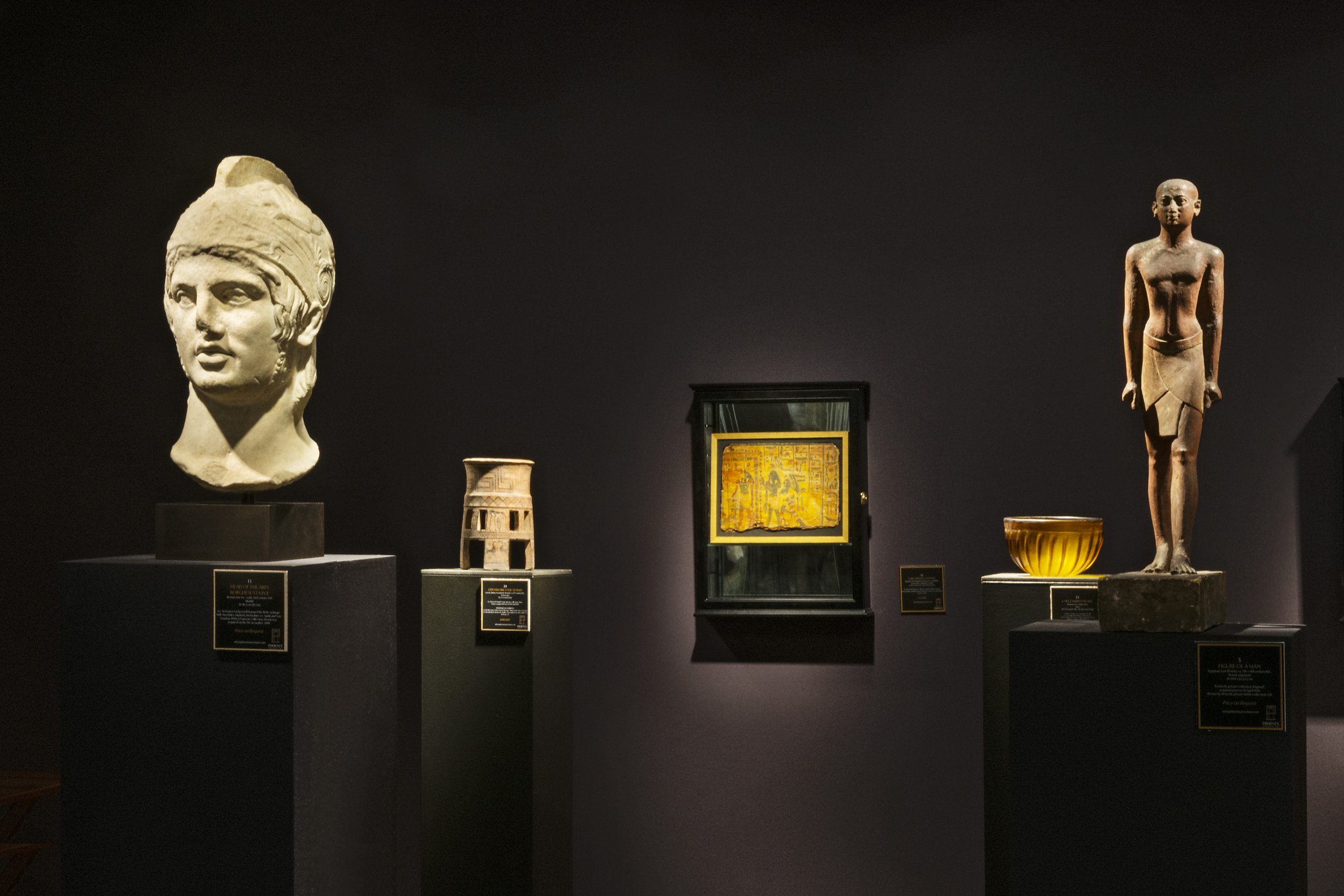
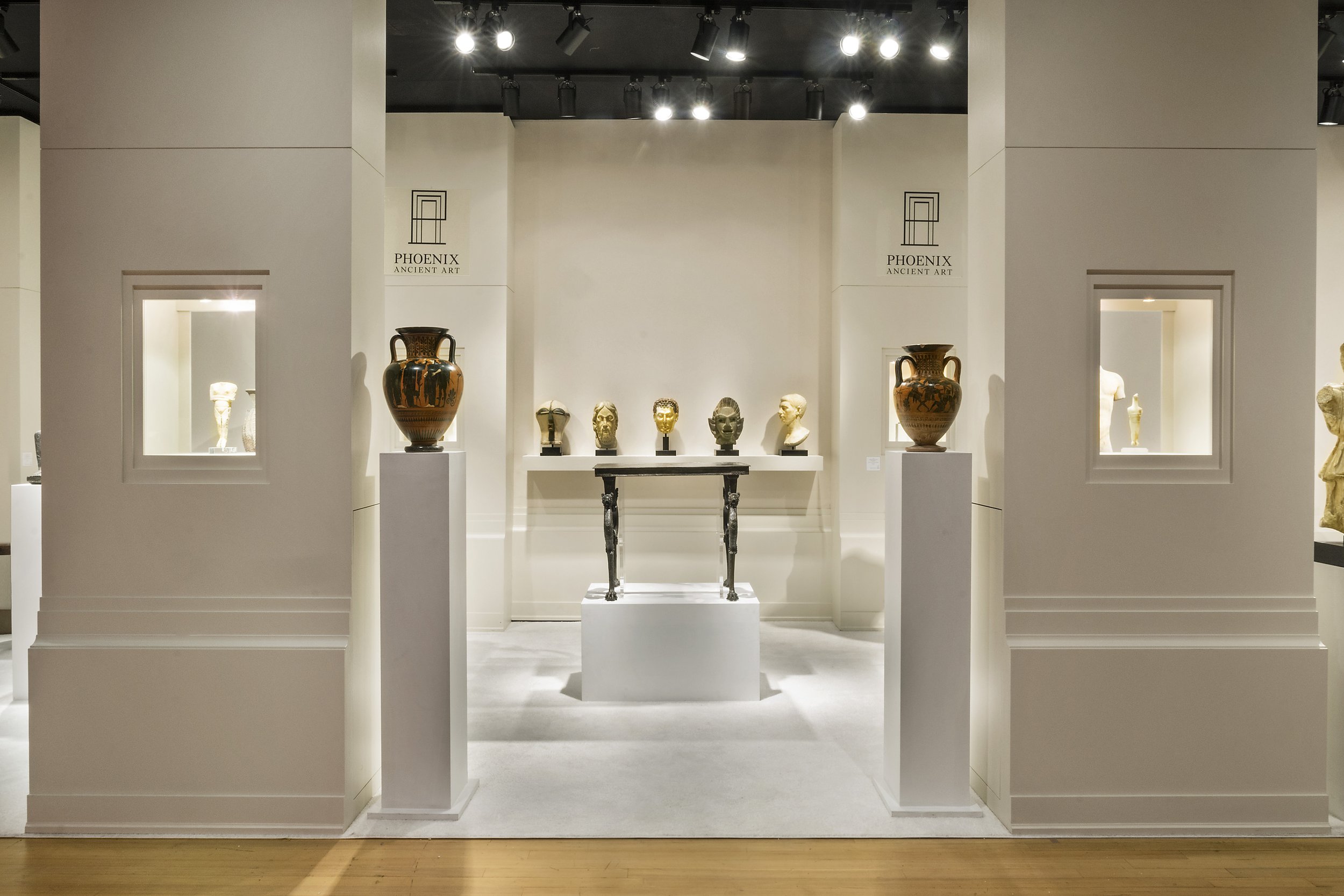
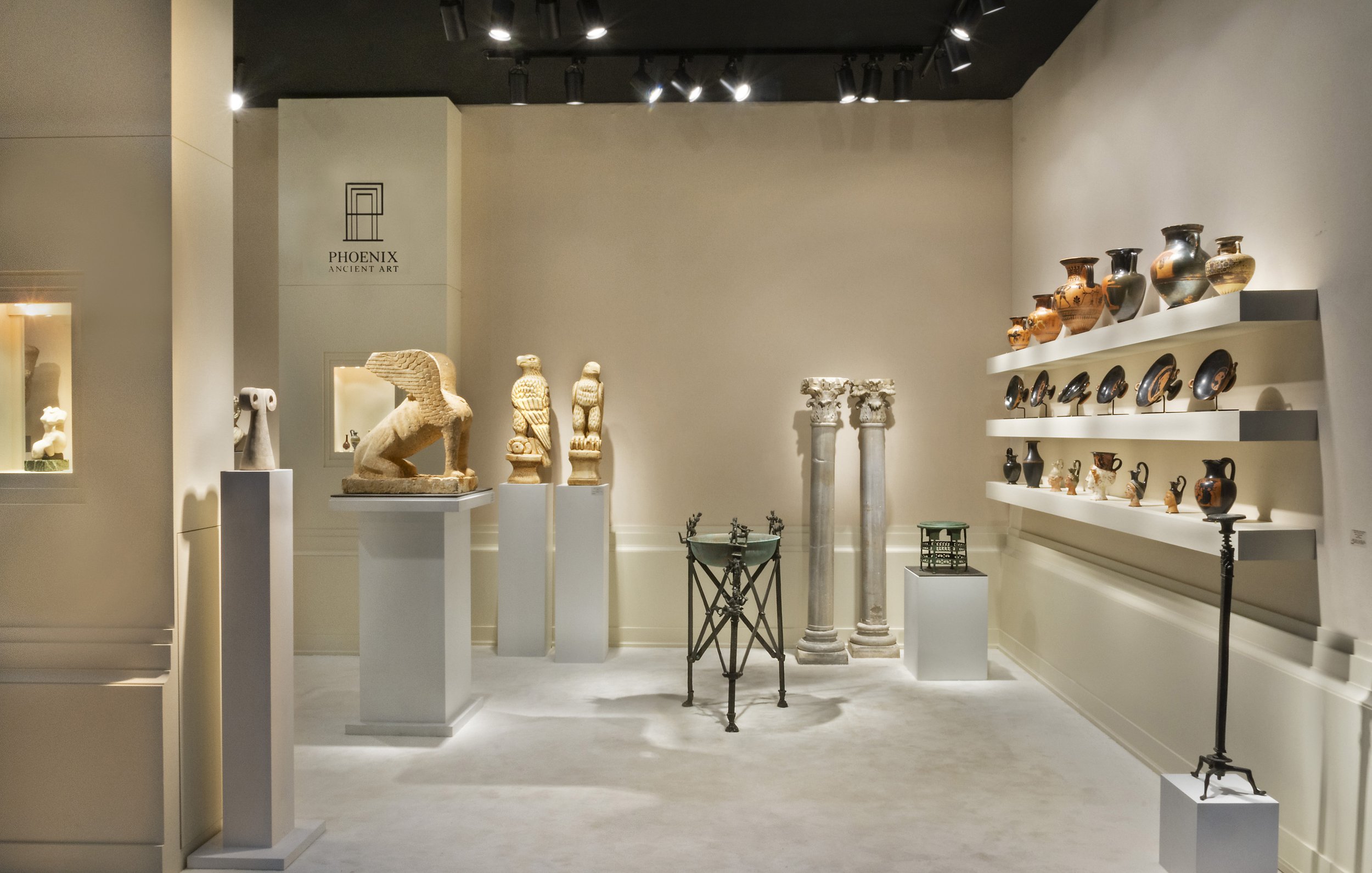
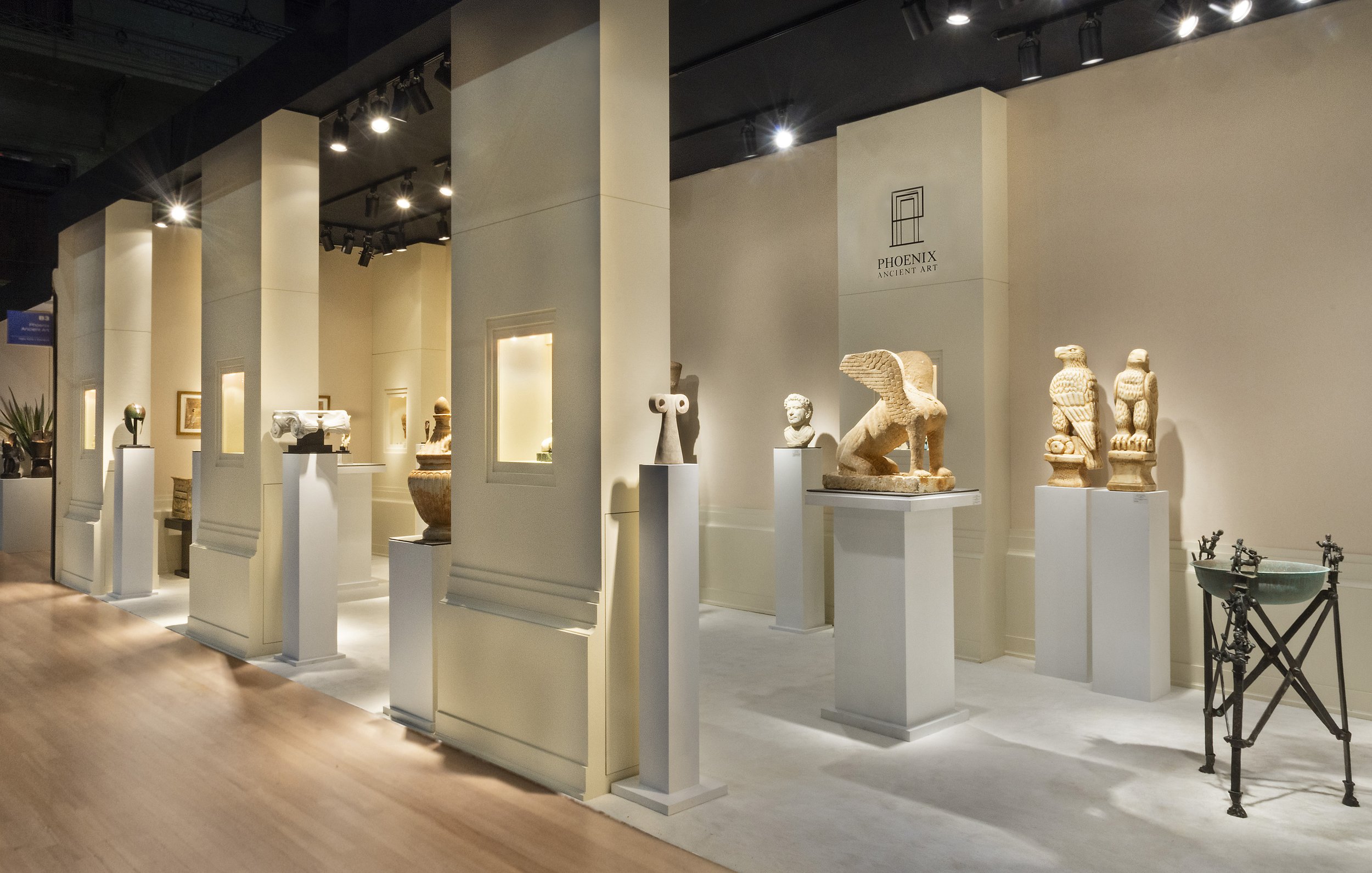
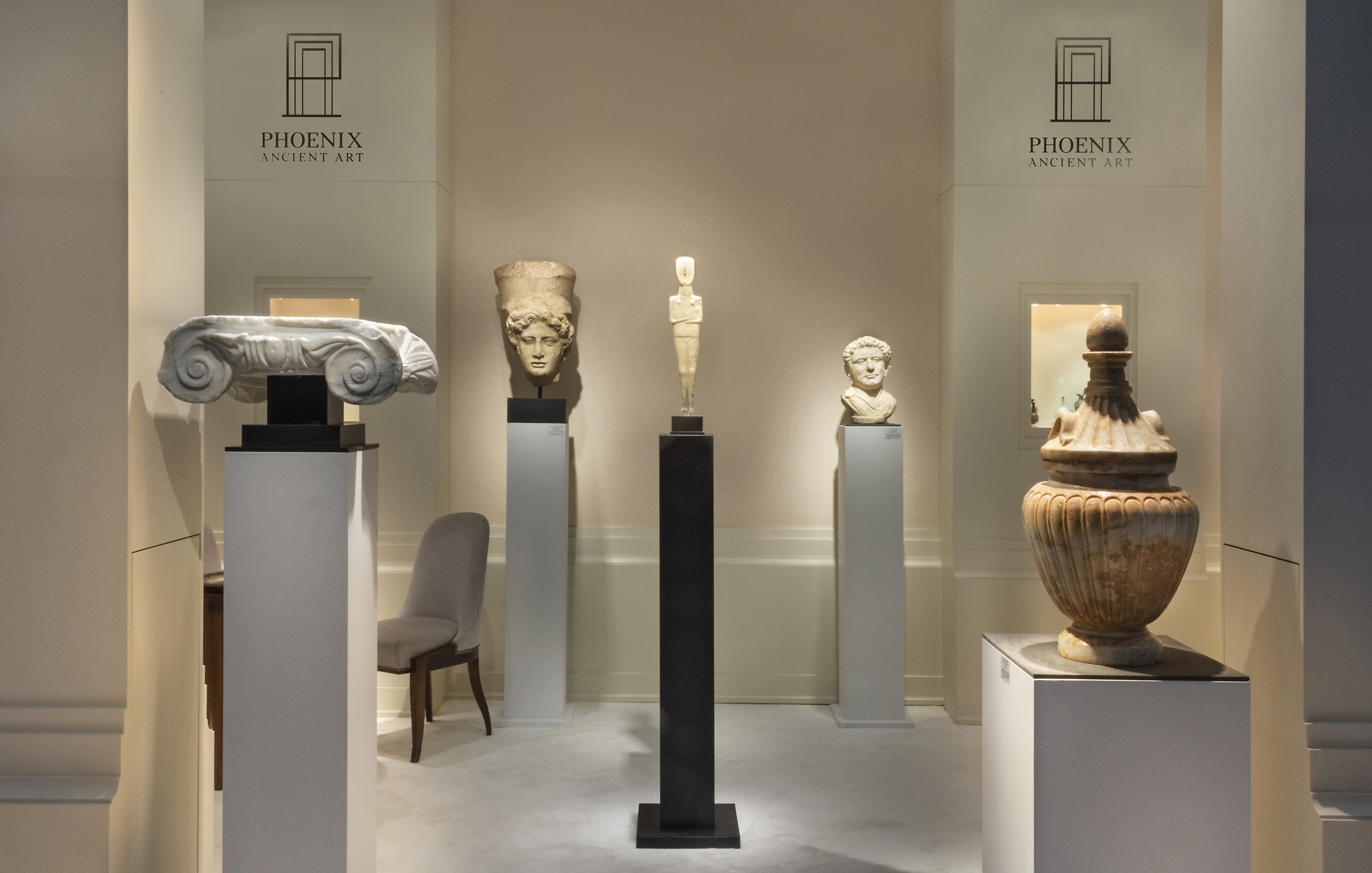
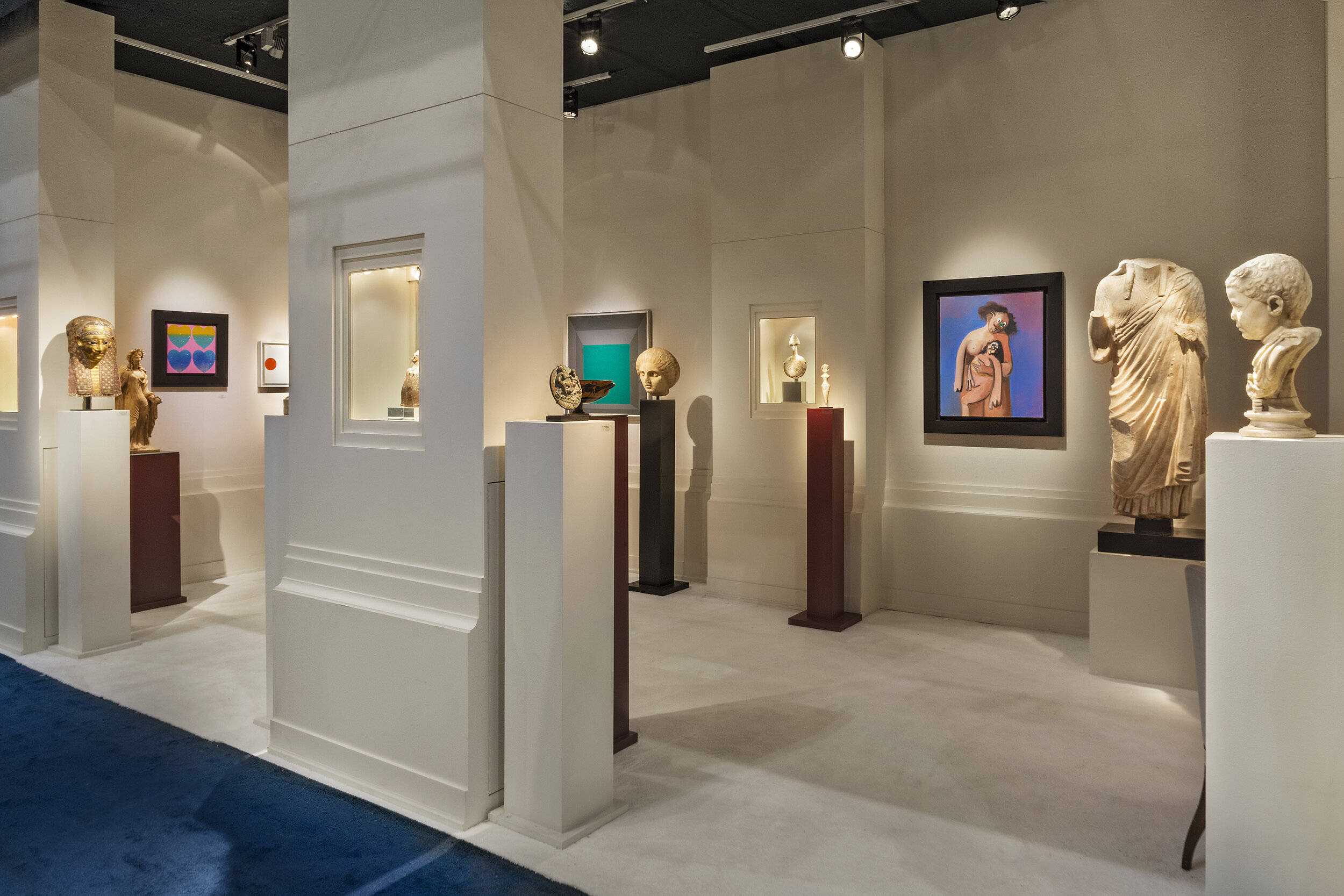
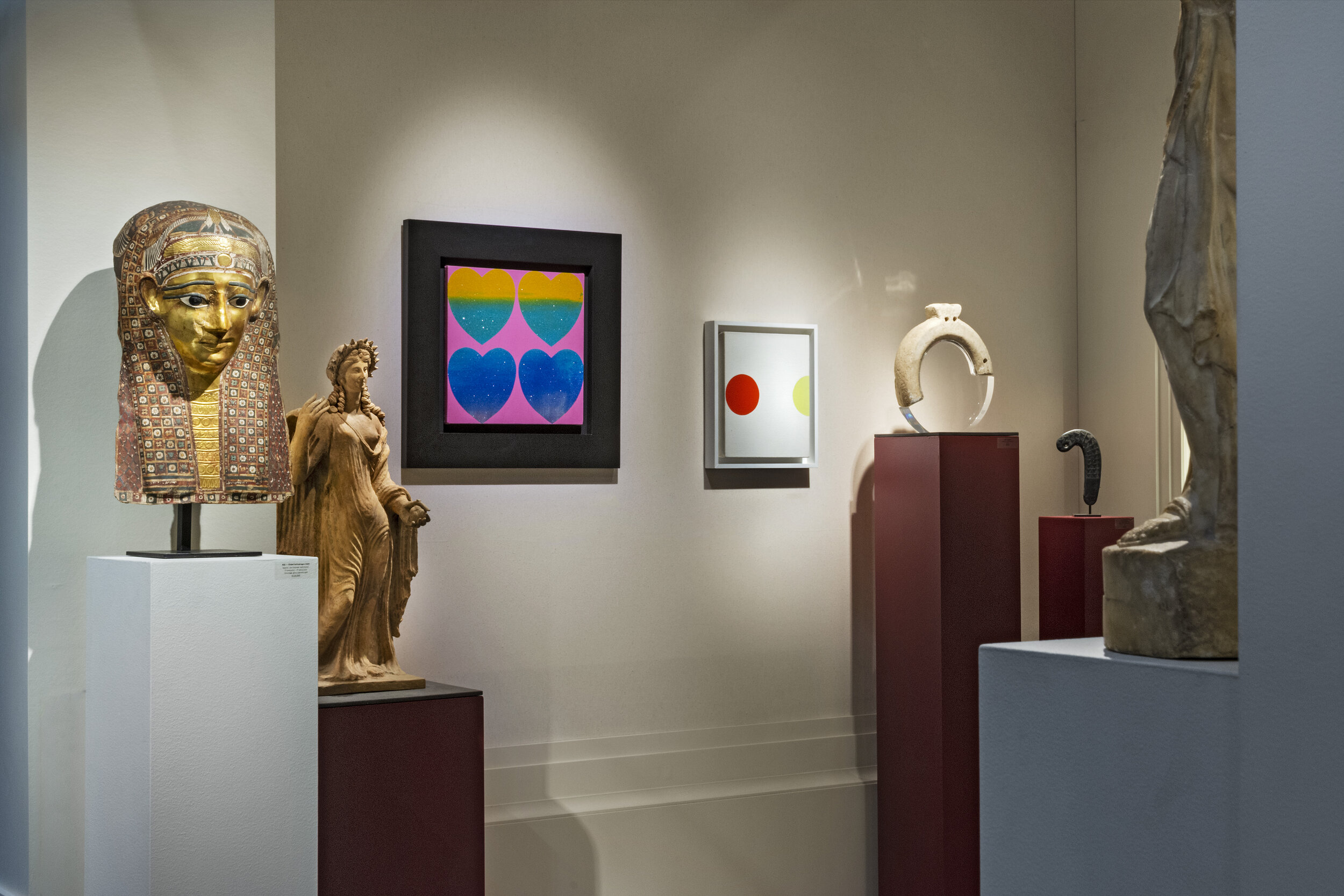
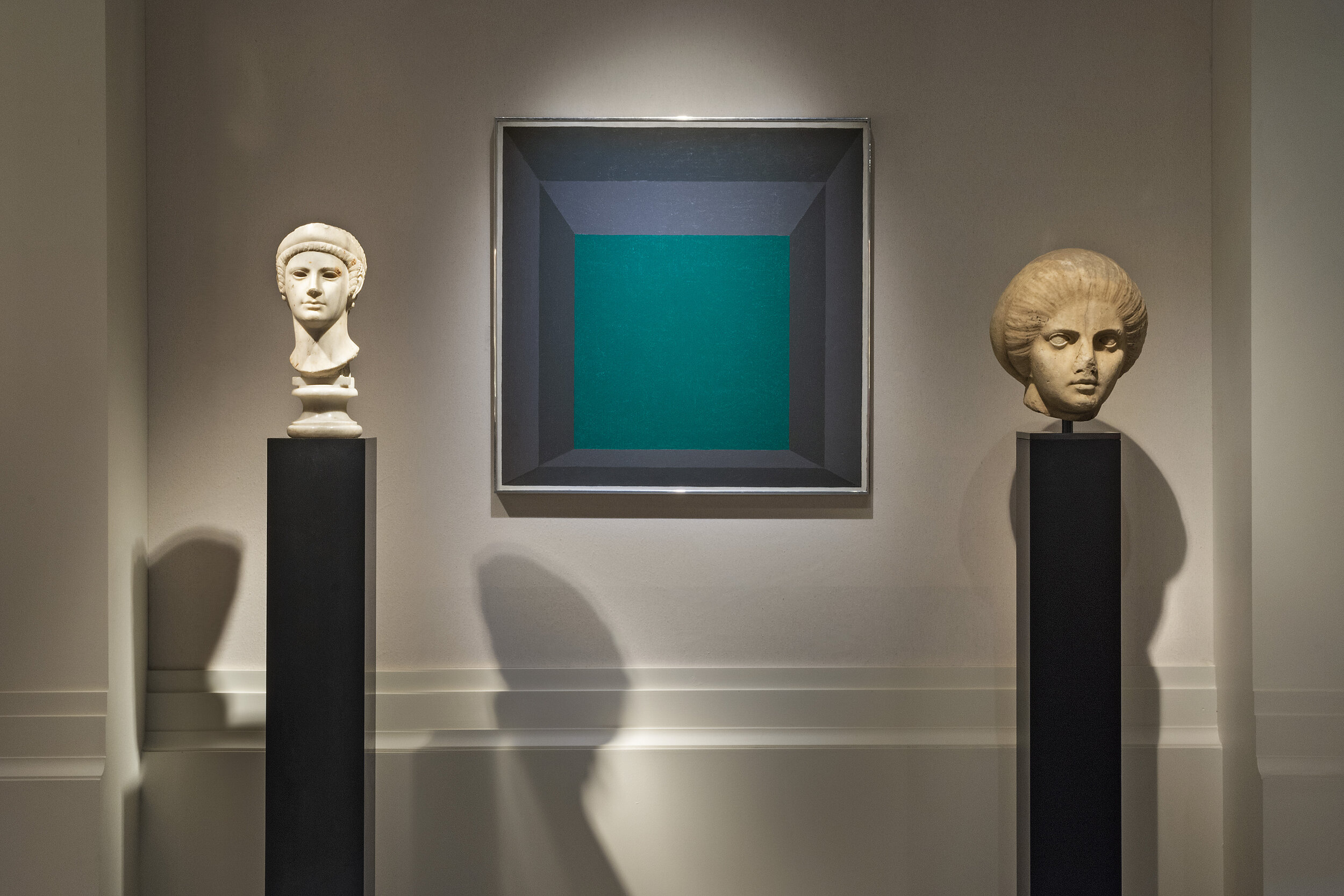
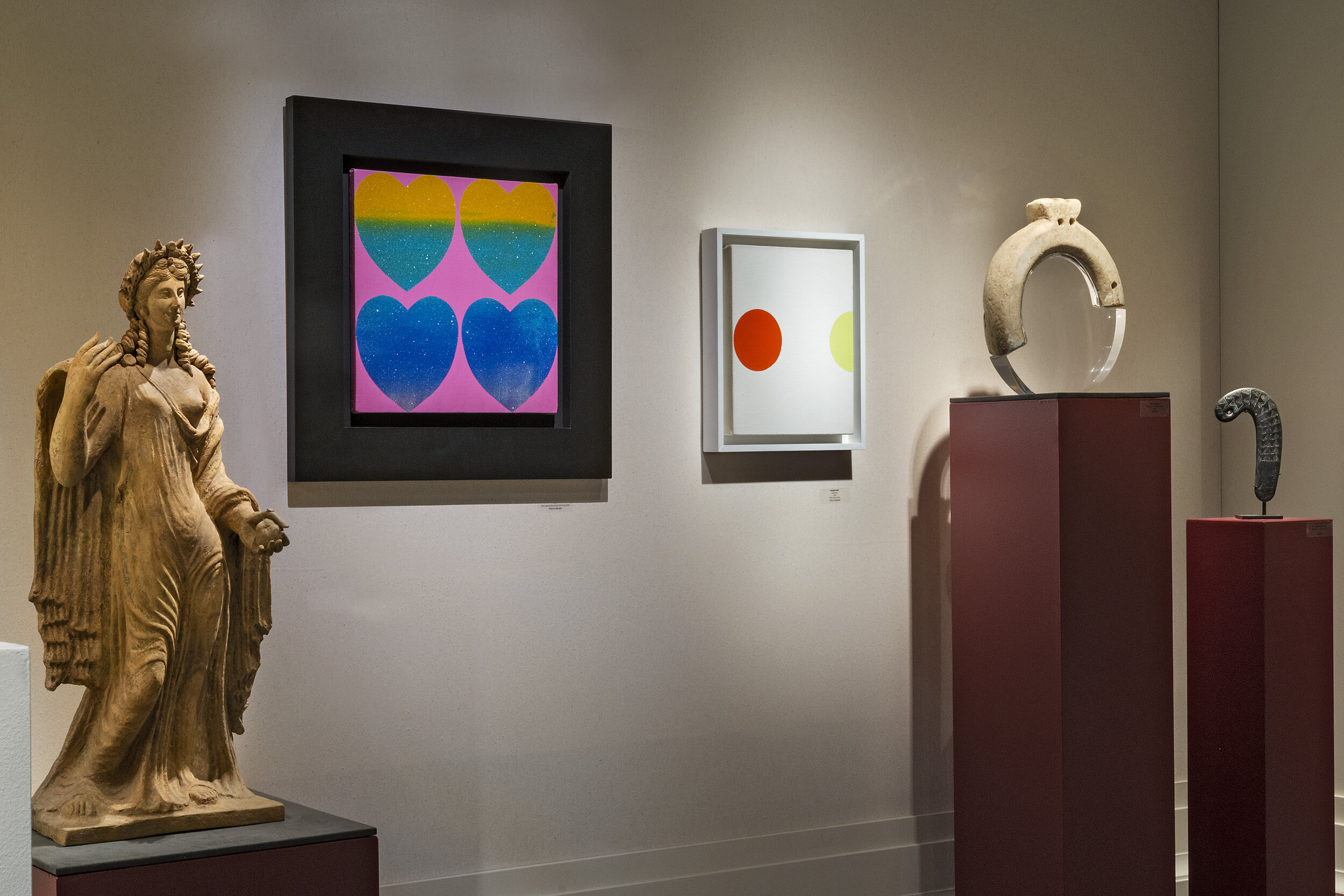
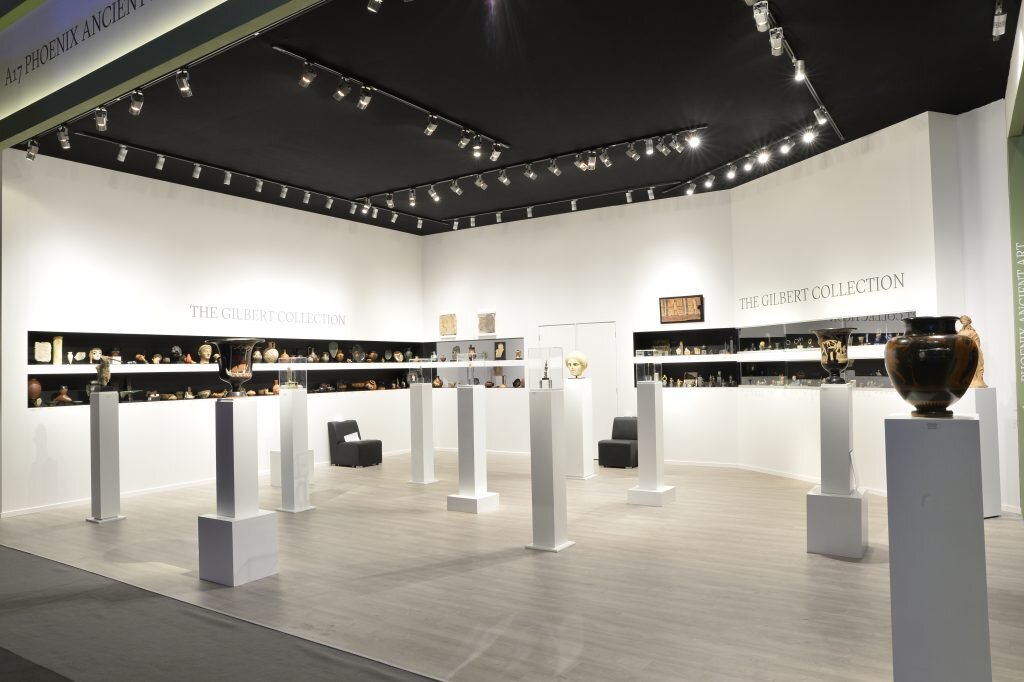
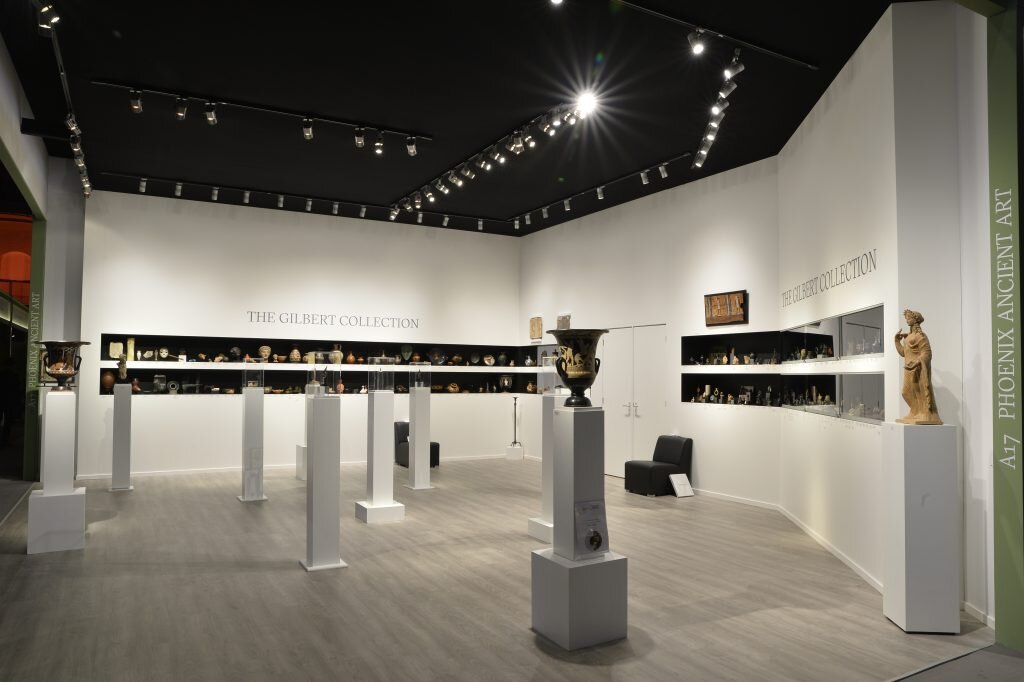
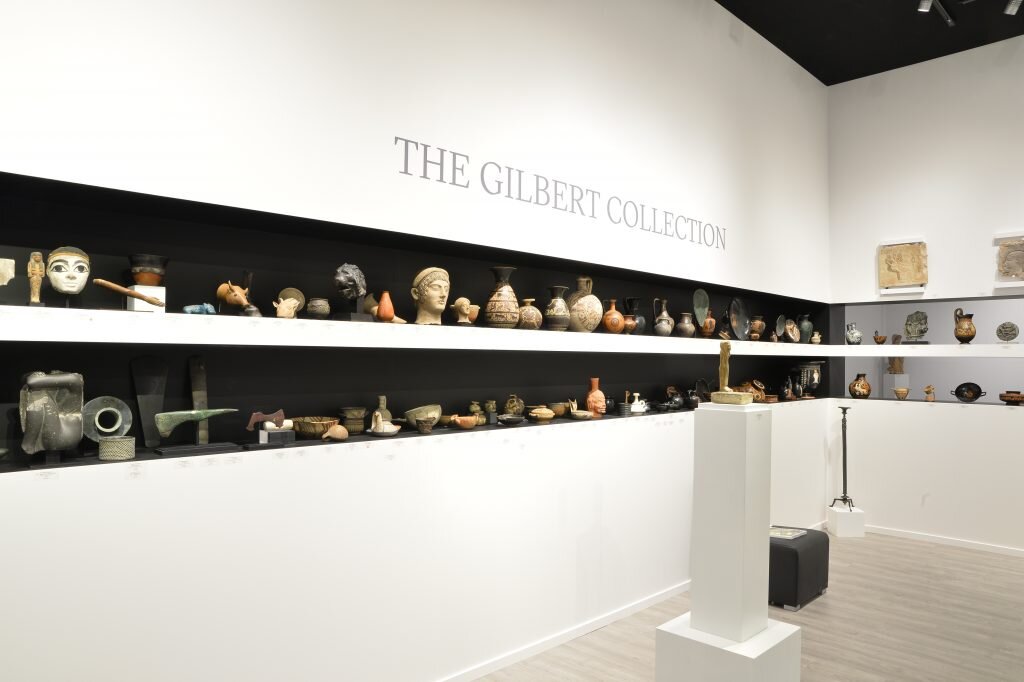
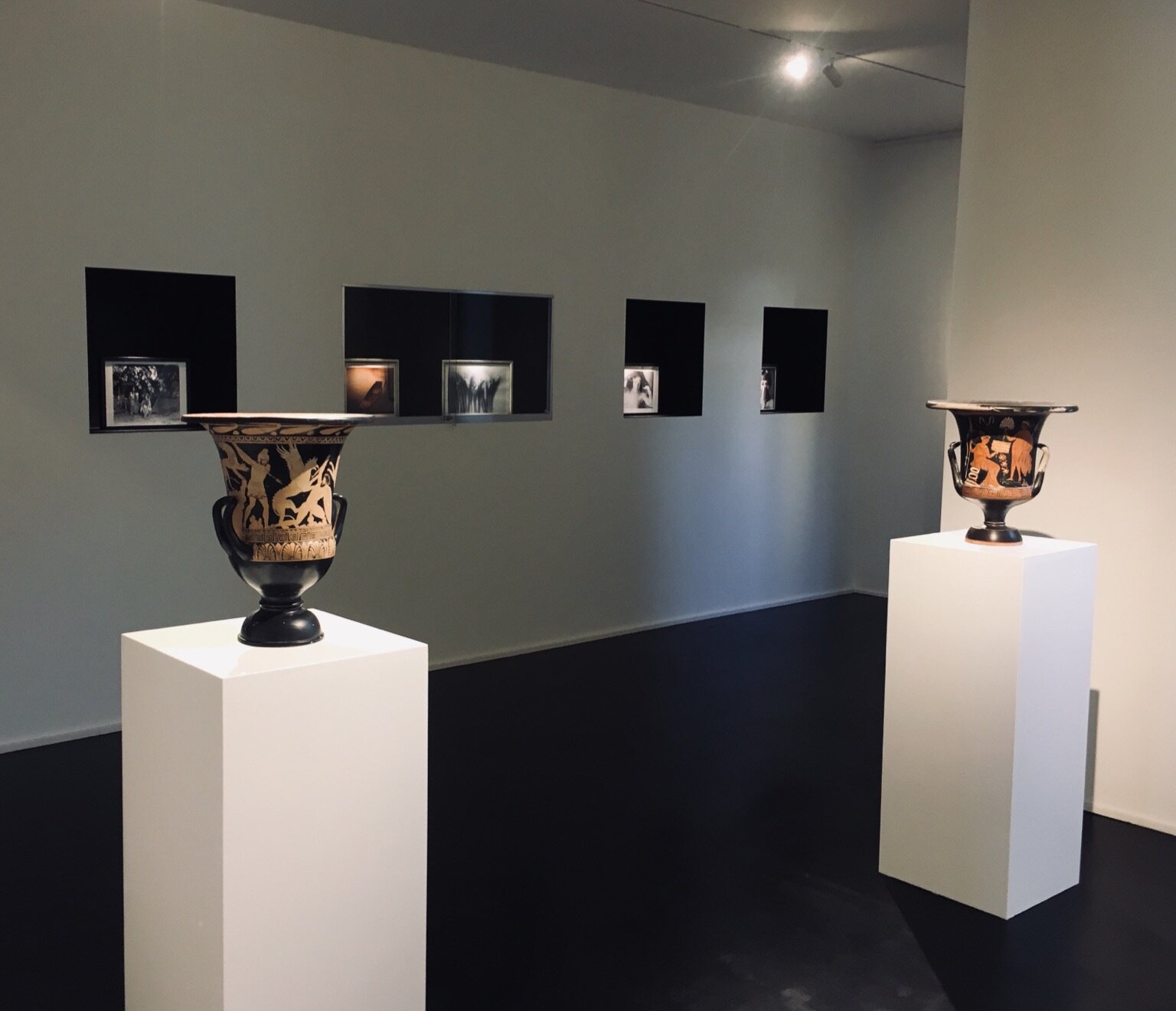
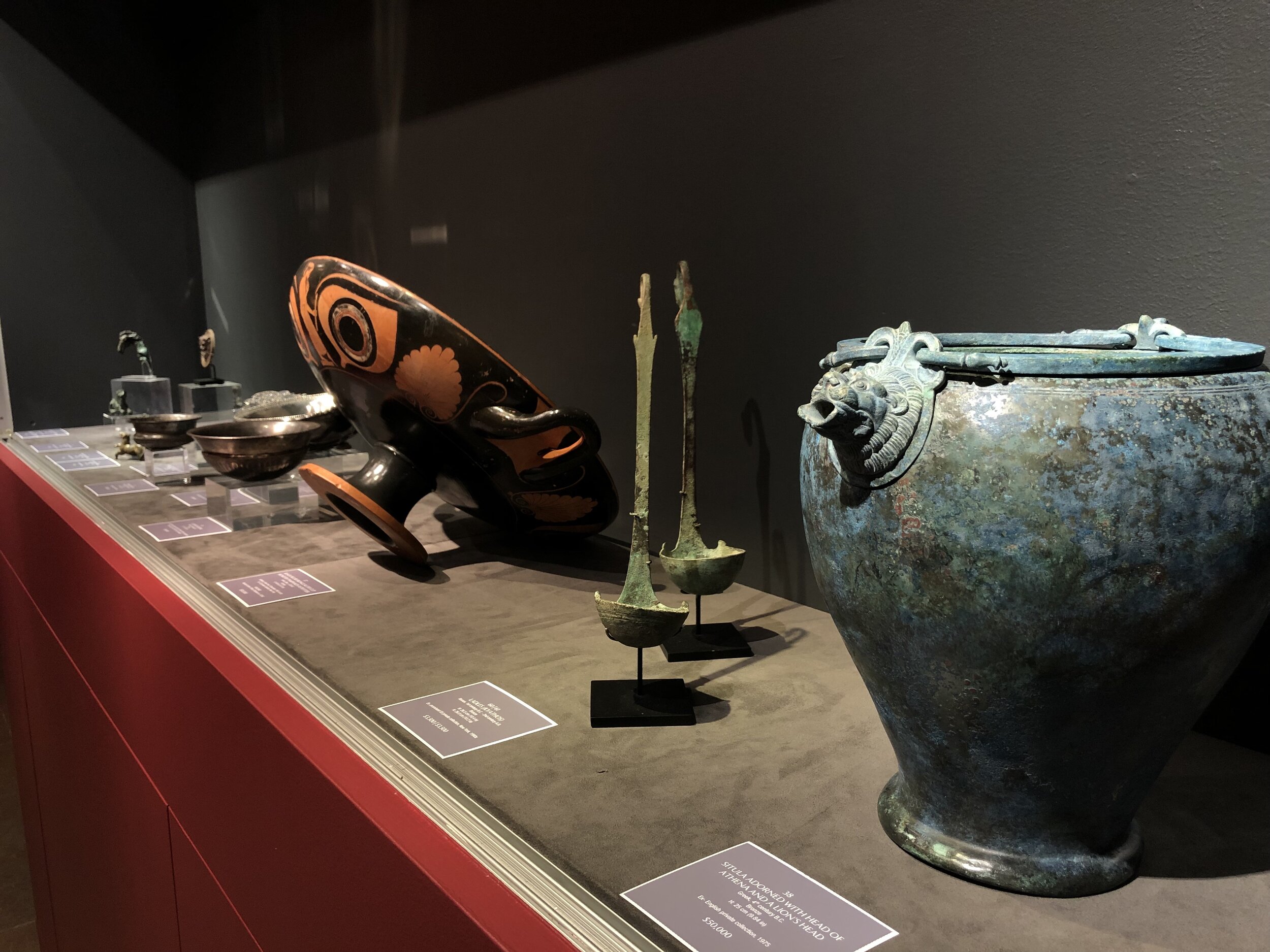
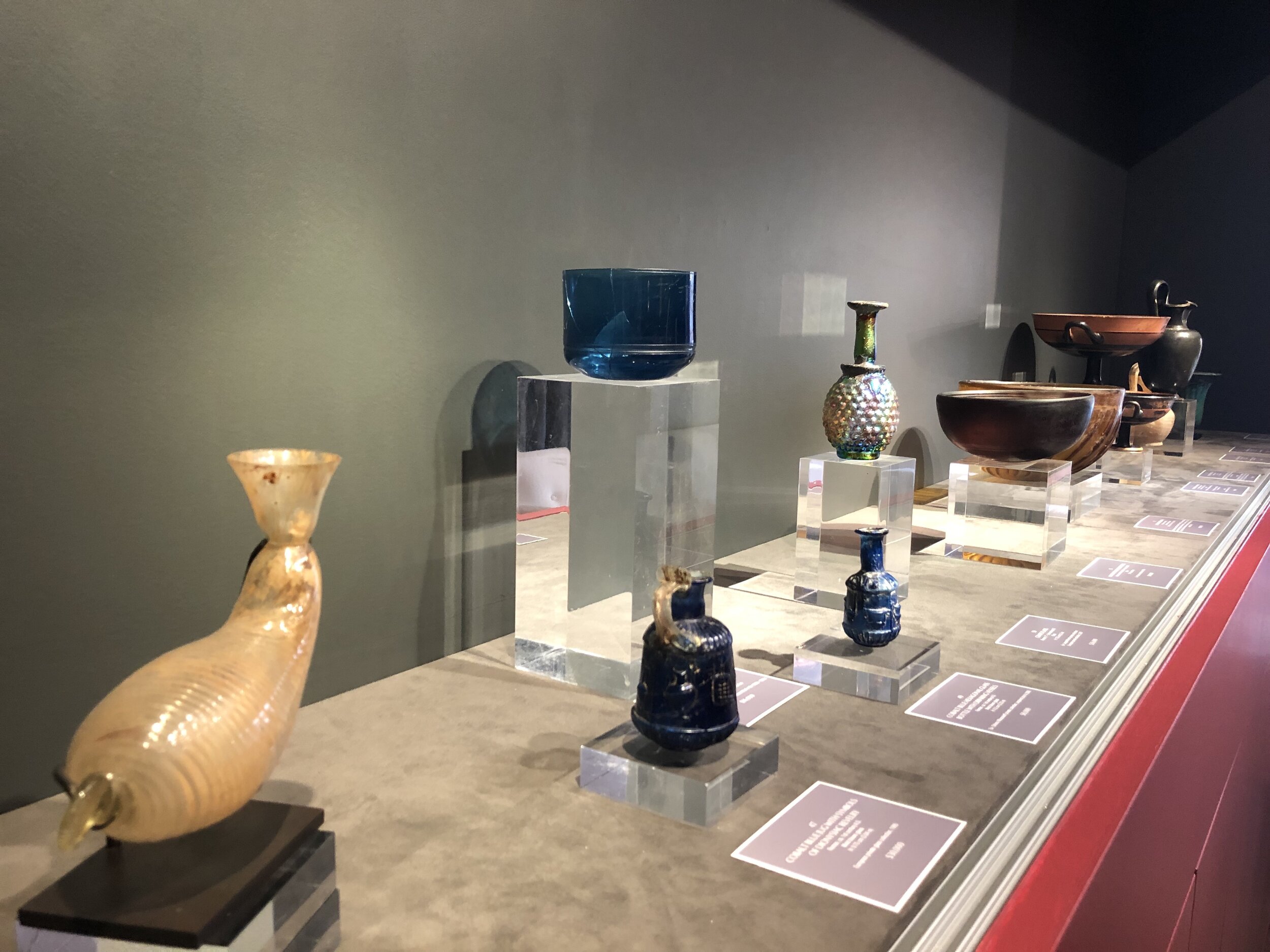
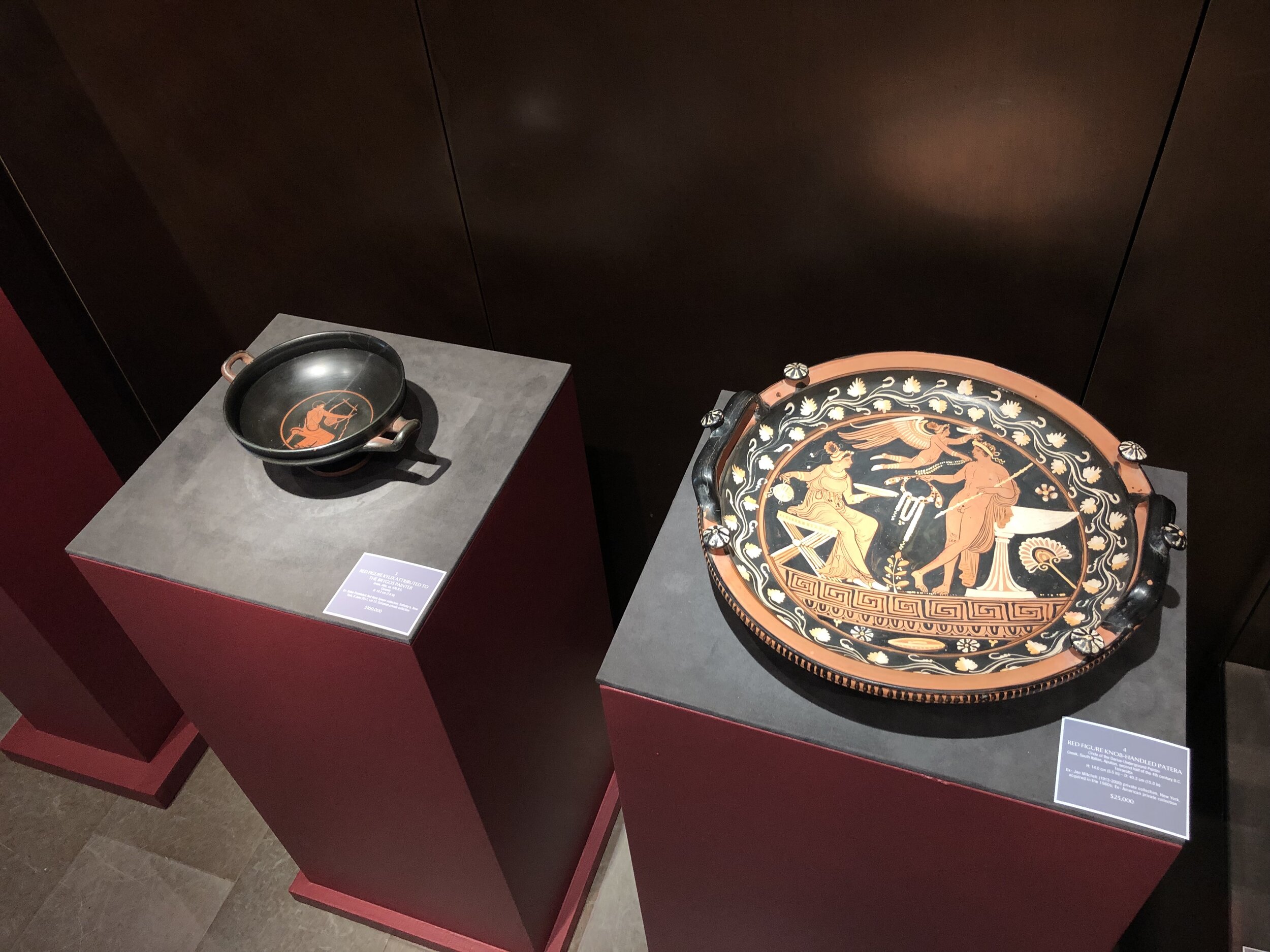
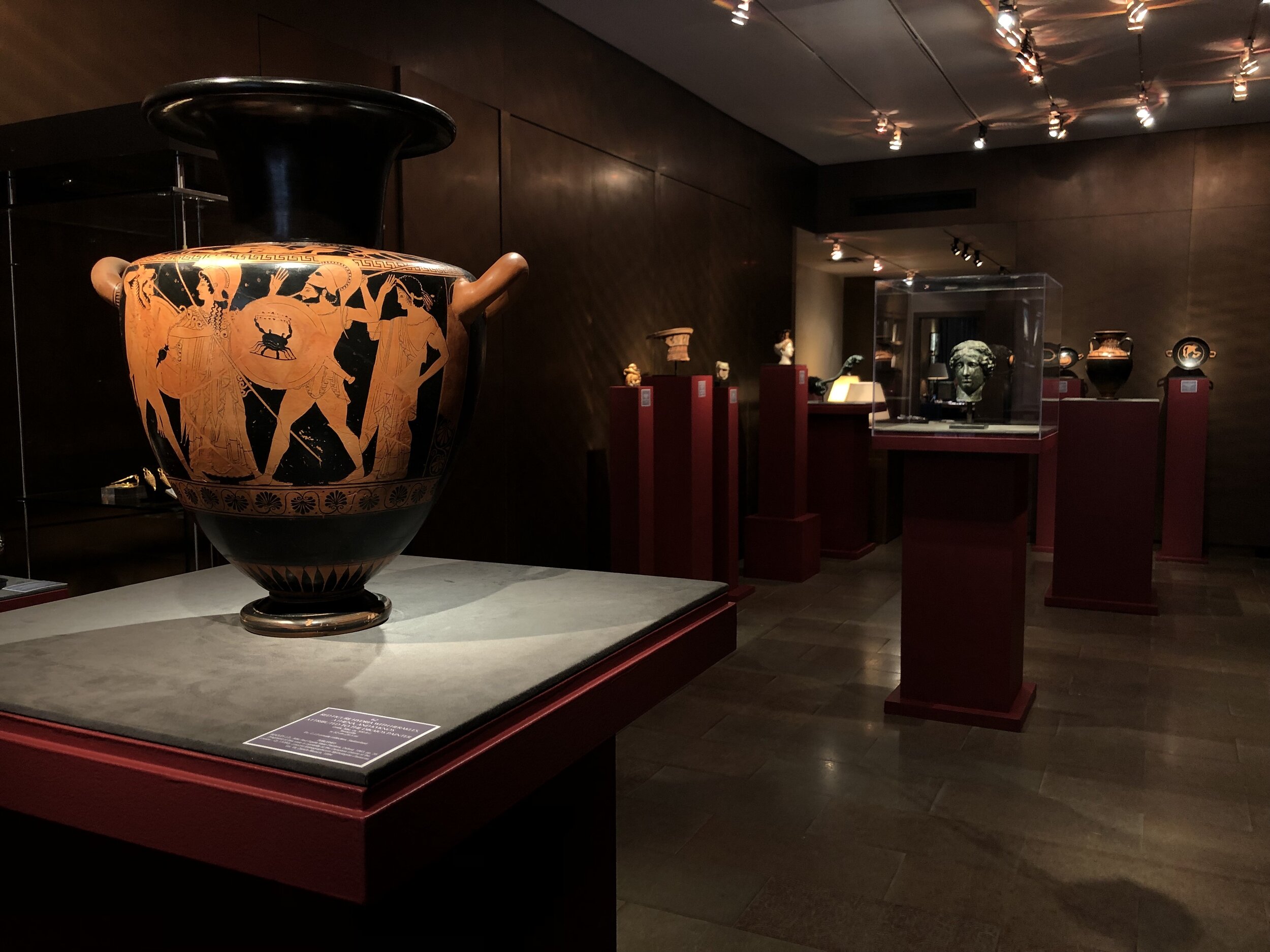
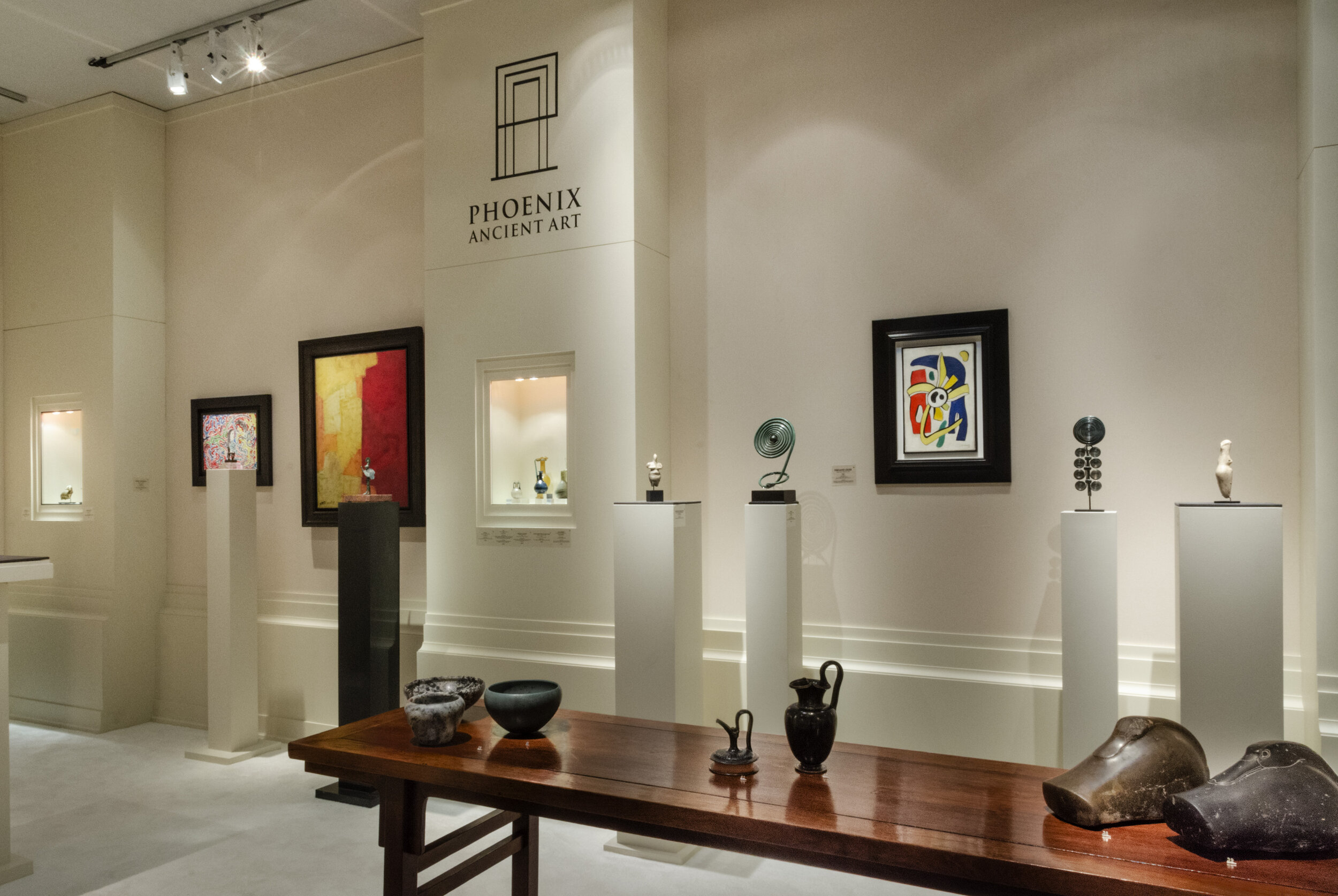
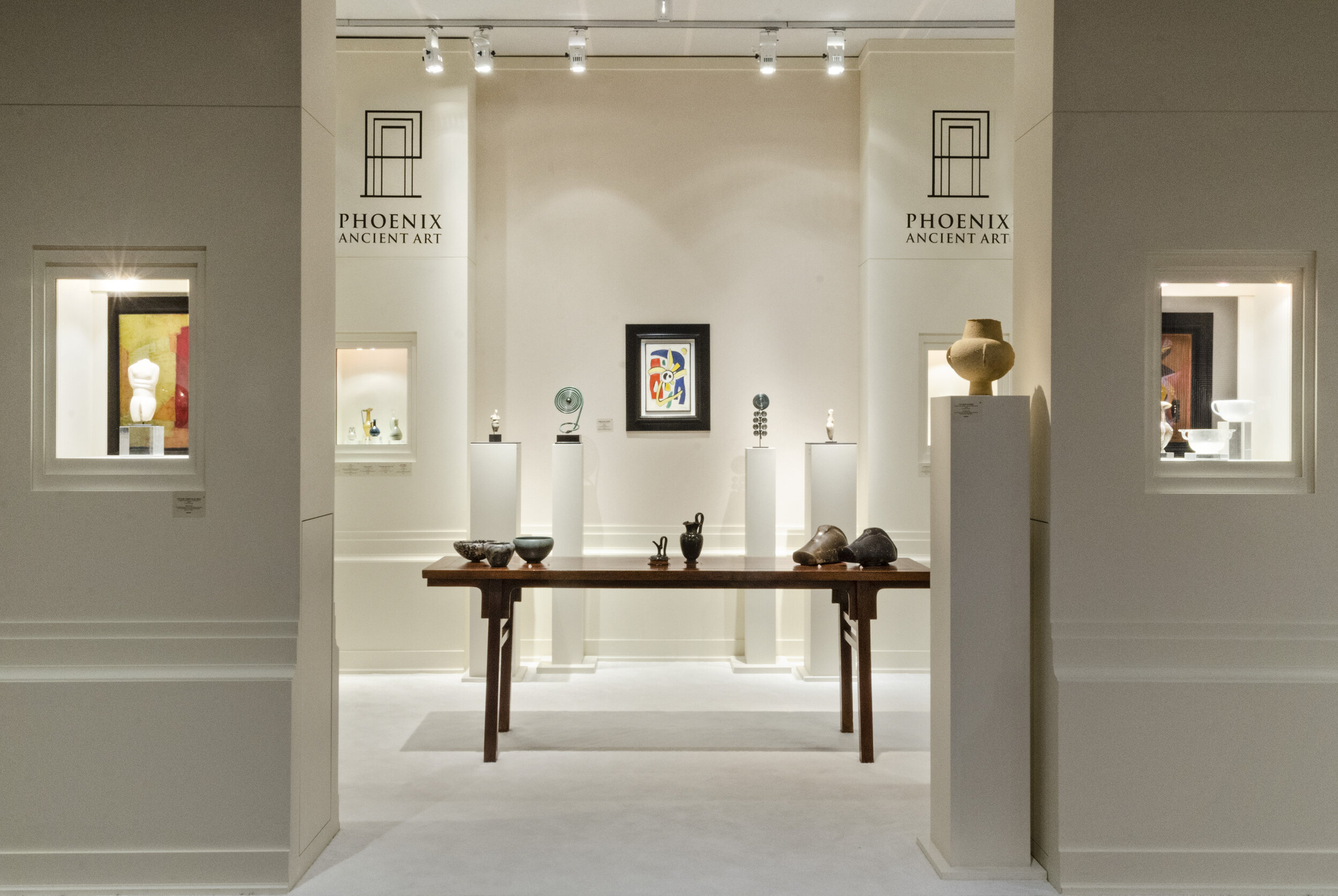
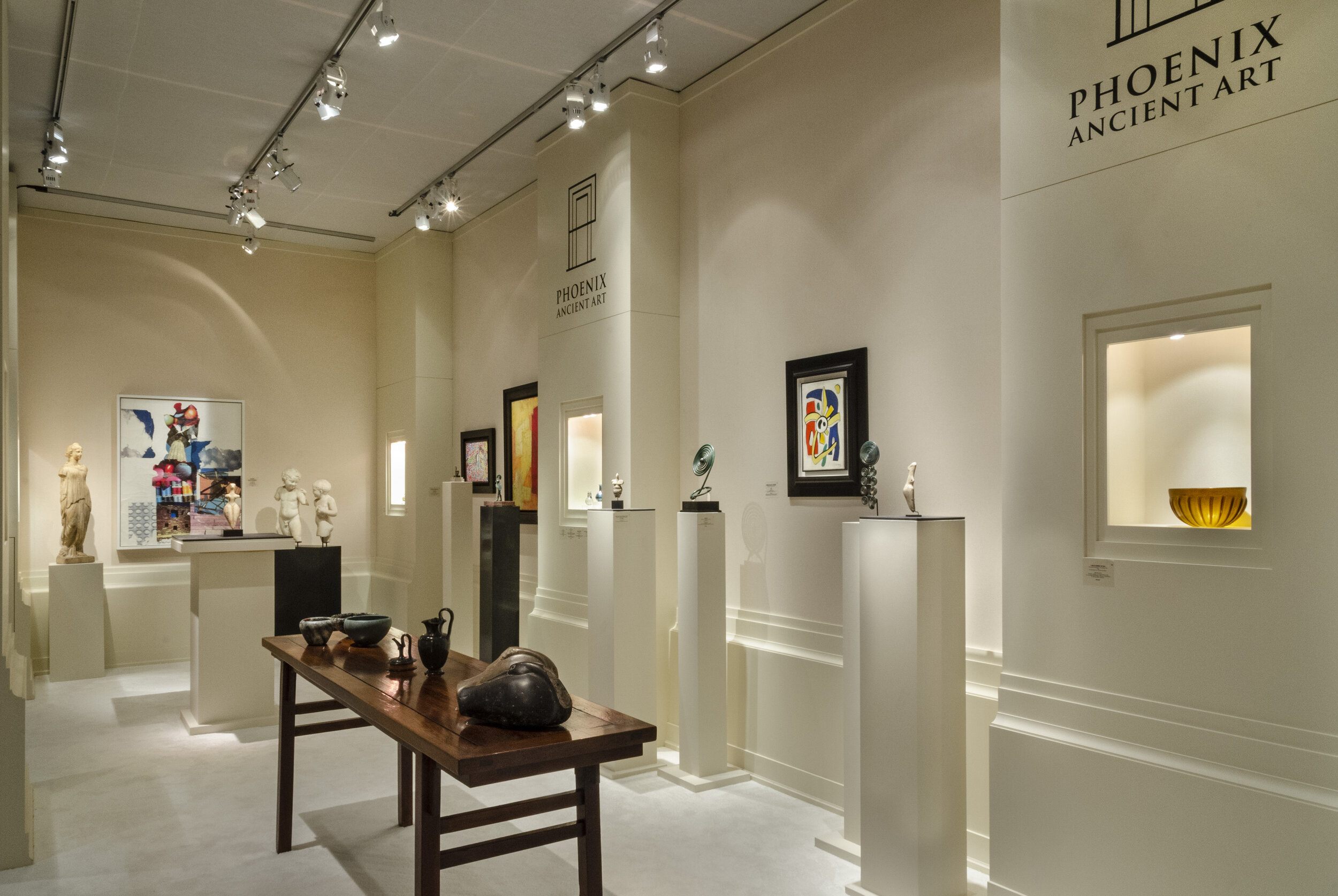
November 6 - 10 2025

Park Avenue Armory, New York

Stand B7

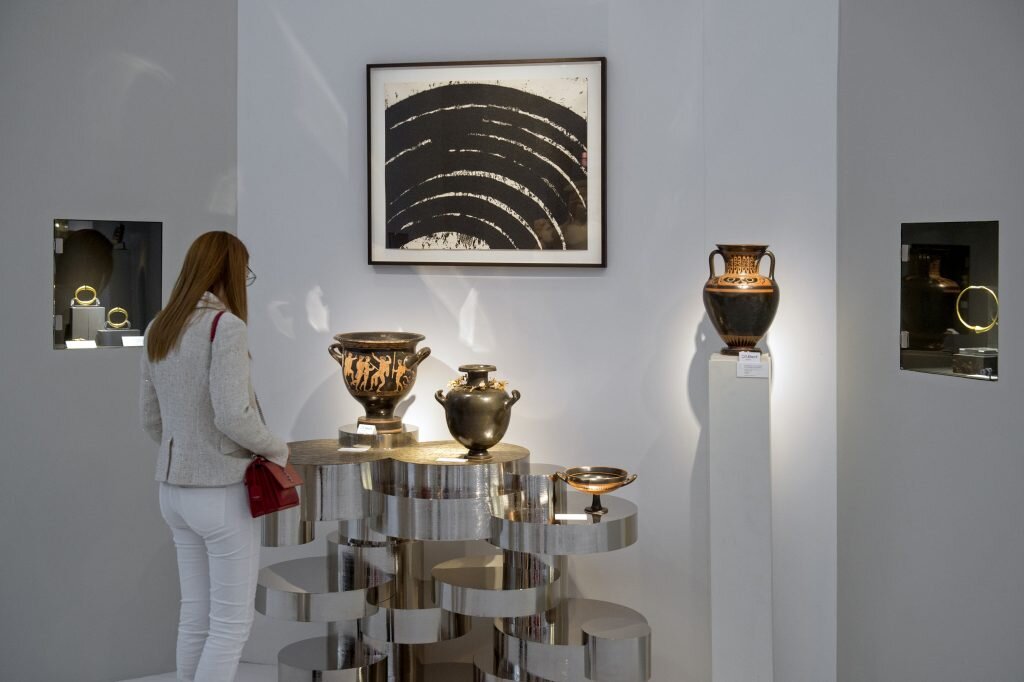
Salon Art + Design
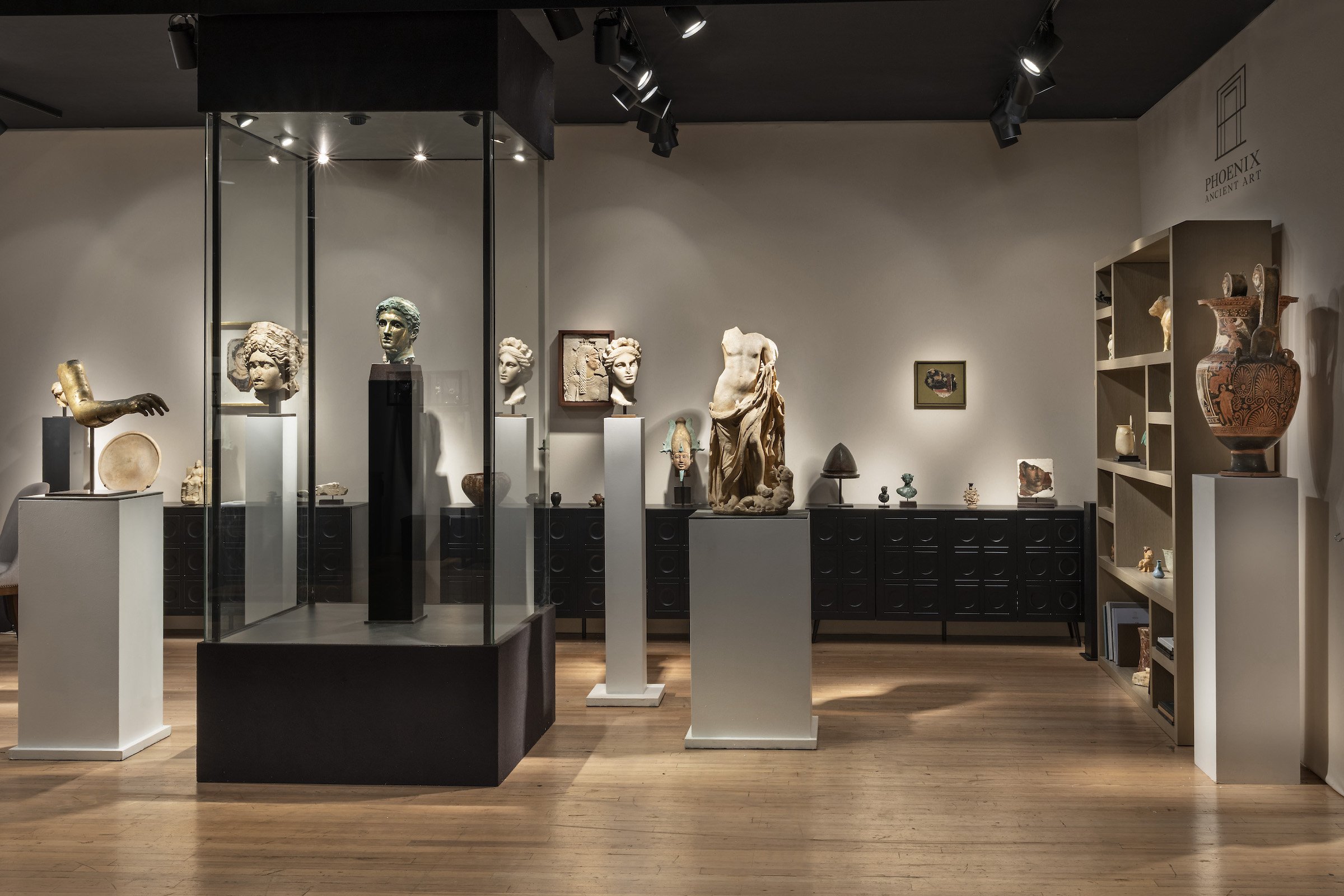

October 16 - 19 2025

Festival Pavilion, Fort Mason, San Francisco, California

Stand B7

The San Francisco Fall Show


November 7 - 11 2024

Park Avenue Armory, New York

Stand B7

Salon Art + Design
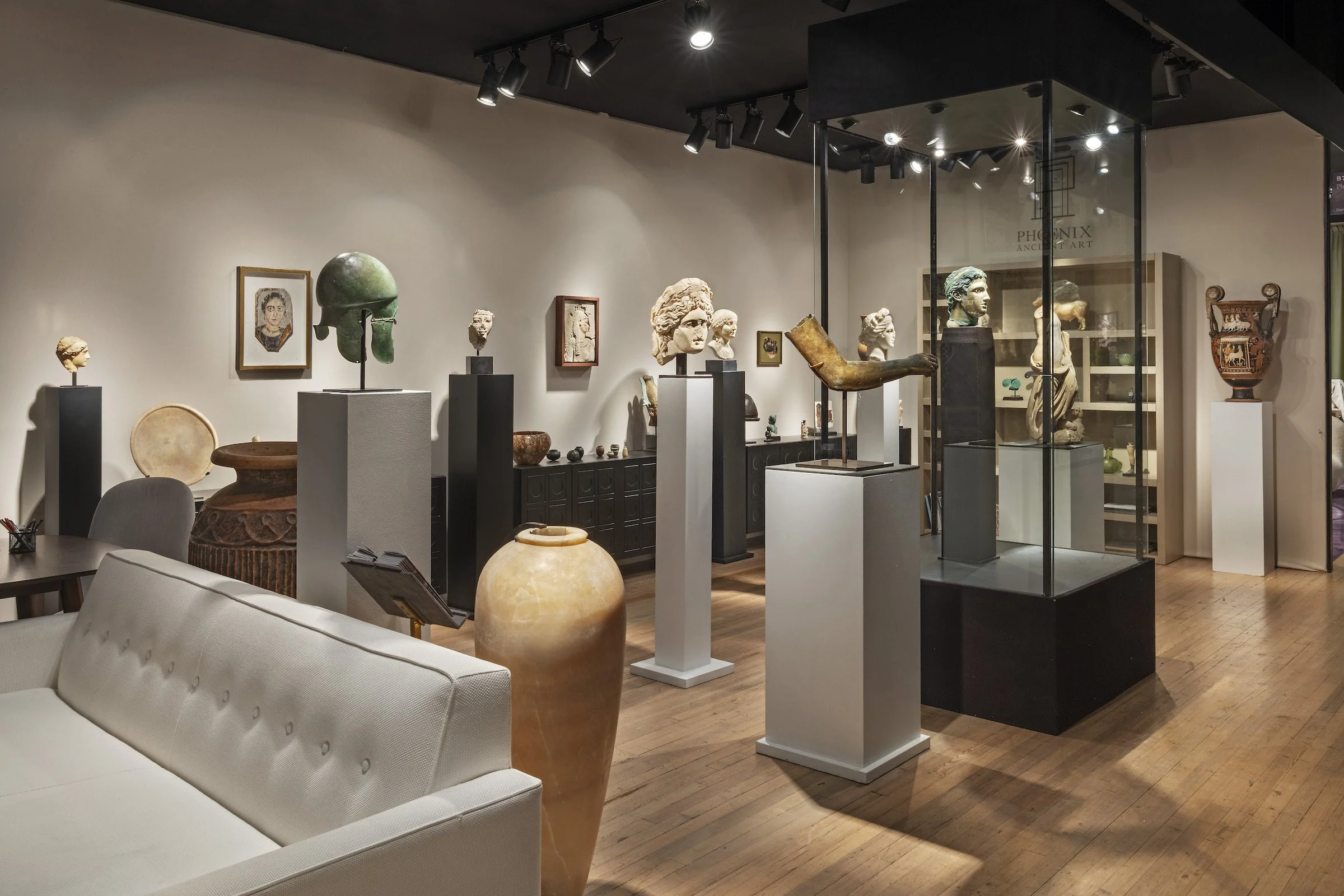

October 17 - 20 2024

Festival Pavilion, Fort Mason, San Francisco, California

Stand A1

The San Francisco Fall Show


June 27 - July 2, 2024

The Royal Hospital Chelsea, London

Stand 302

The Treasure House Fair


Salon Art + Design

November 9 - 13 2023

Park Avenue Armory, New York

Stand B9
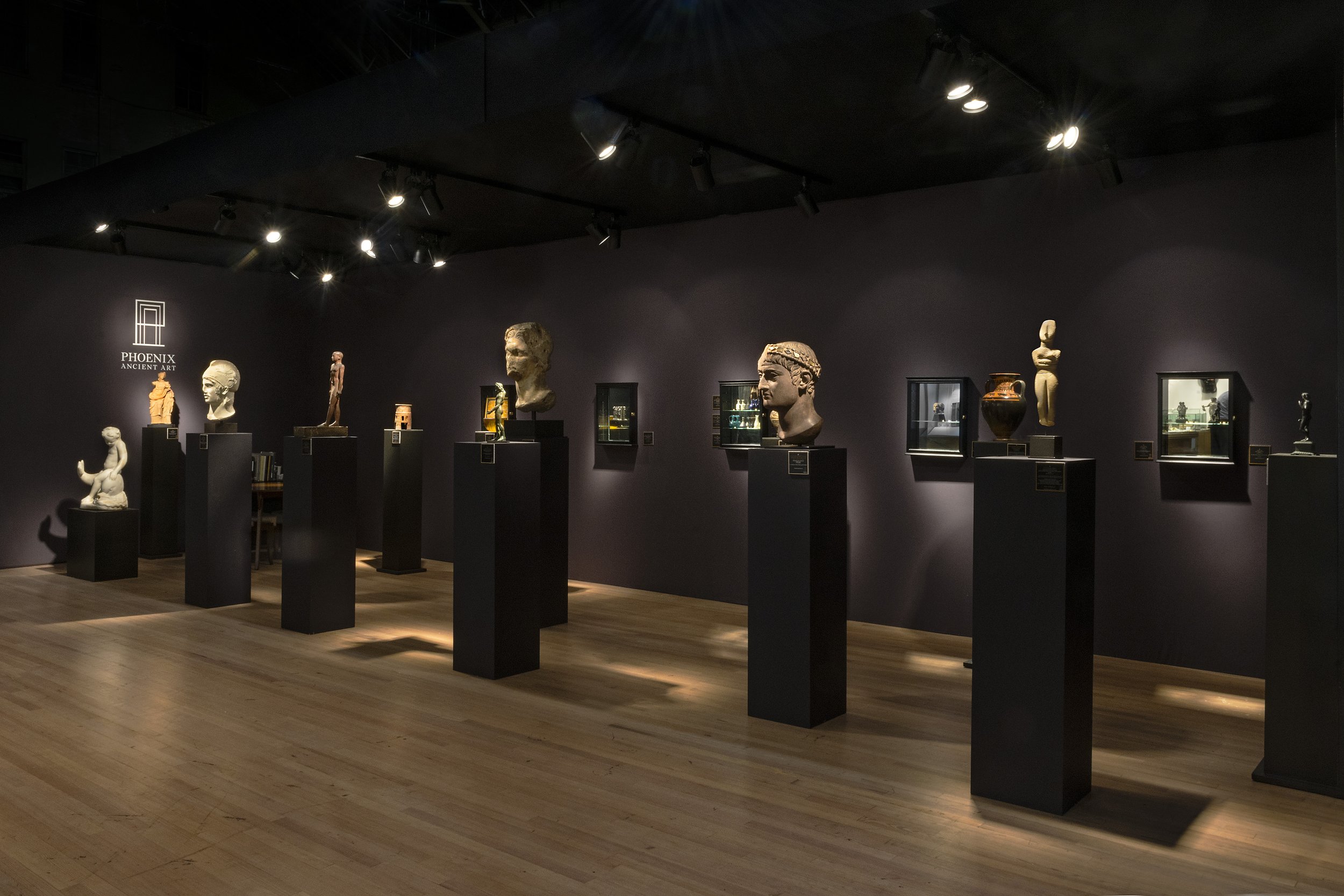

The San Francisco Fall Show

October 11 - 14 2023

Festival Pavilion, Fort Mason, San Francisco, California

Stand A1


Salon Art + Design

November 10 - 14 2022

Park Avenue Armory, New York

Stand B9
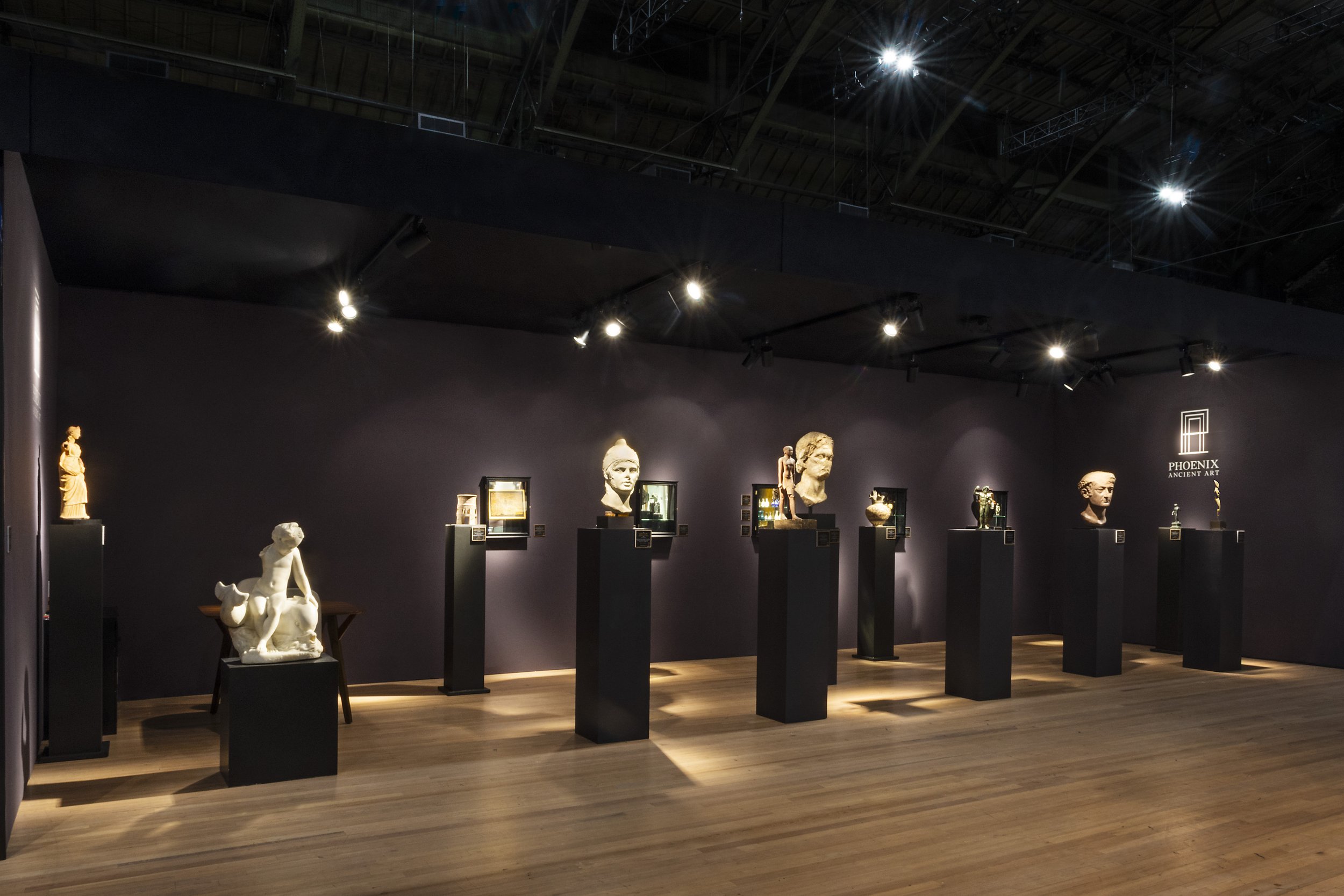

The San Francisco Fall Show

October 12 - 16 2022

Festival Pavilion, Fort Mason, San Francisco, California

Stand B5
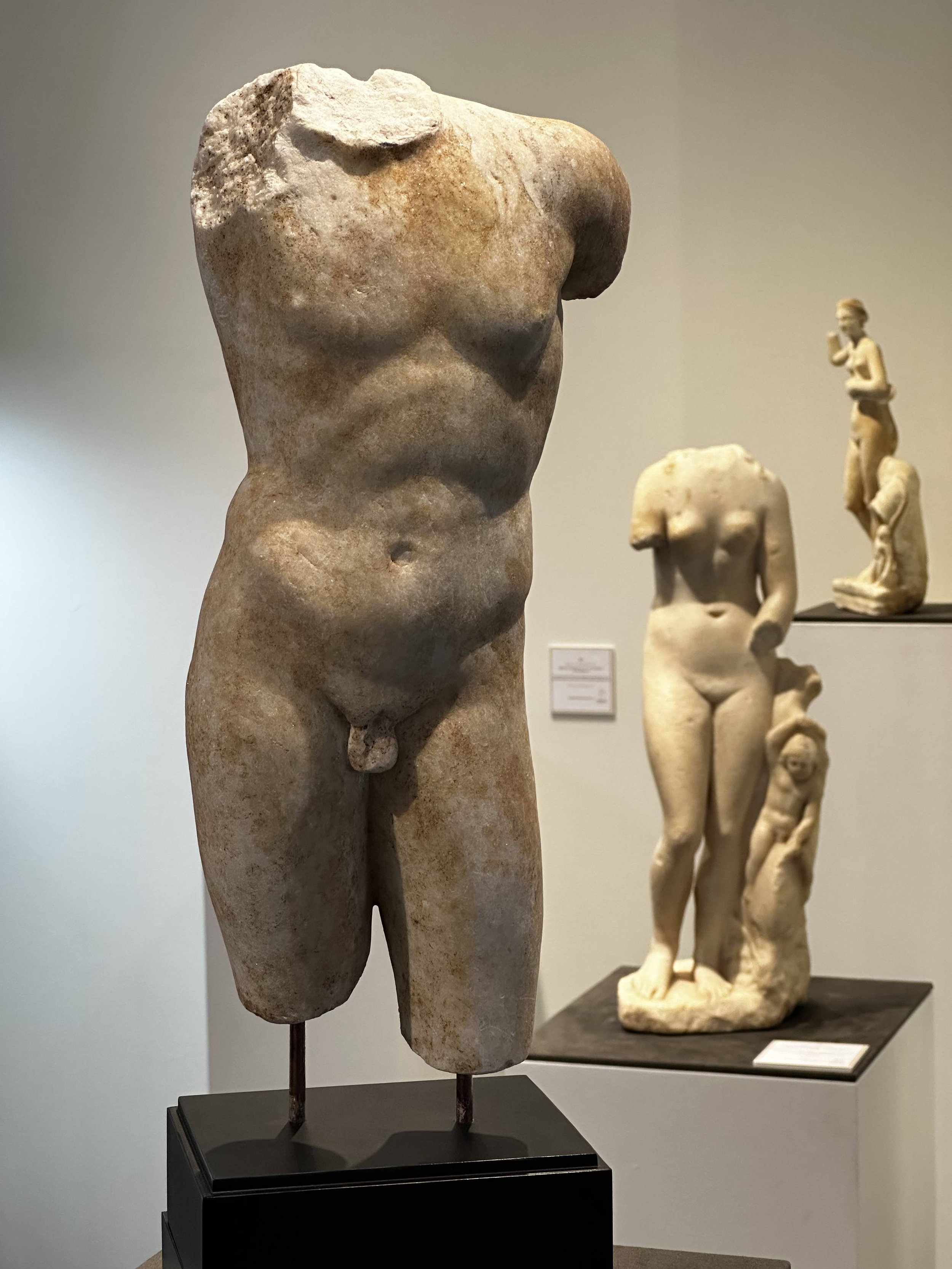

Classical Sculpture

September 23 2022 - December 31 2022

Geneva, Switzerland

6, rue Verdaine


Salon Art + Design

November 11 - 15 2021

Park Avenue Armory, New York

Stand B3
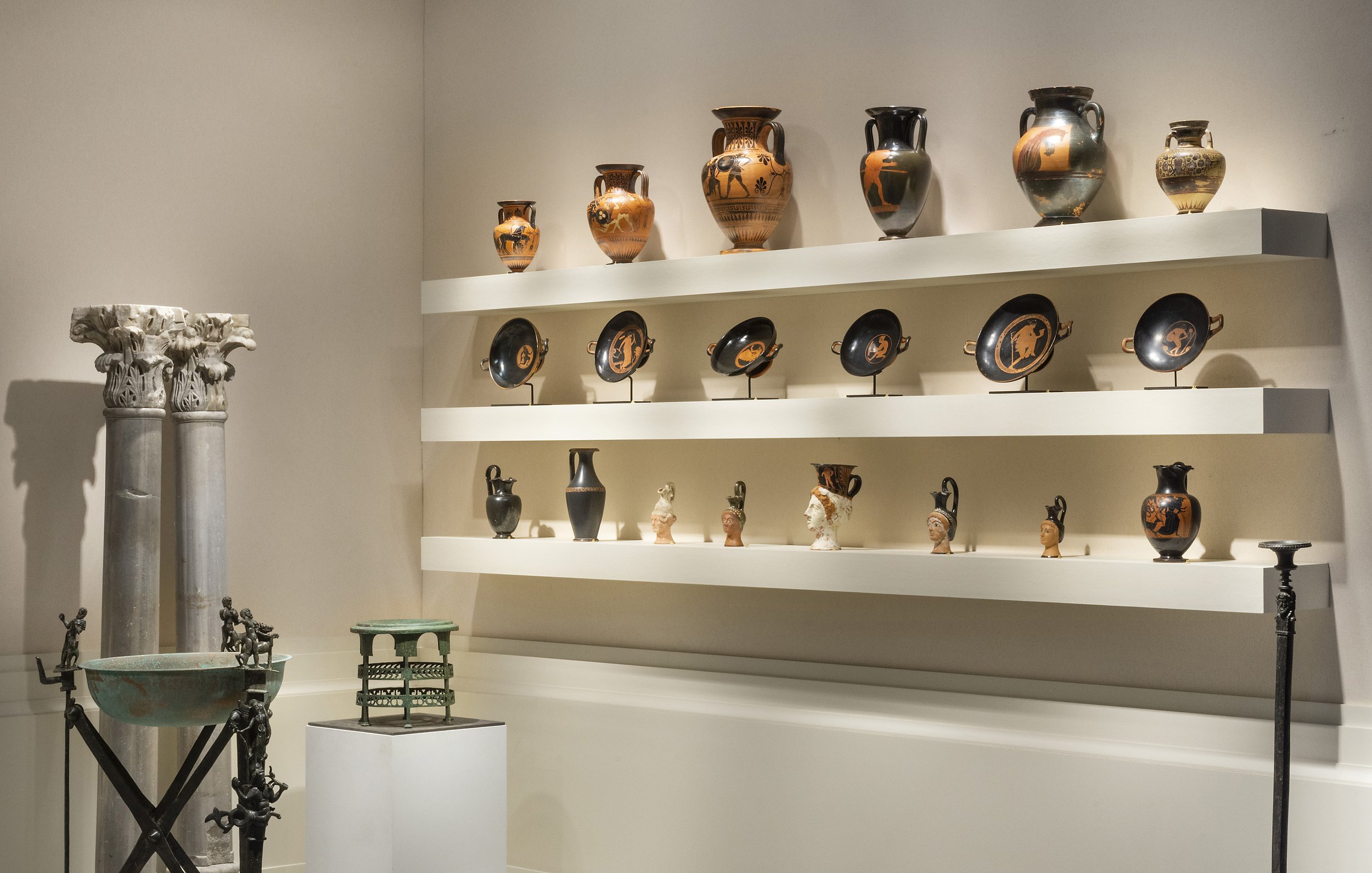

Fabulous Monsters

July 29 - September 30 2021

New York, NY

725 Fifth Avenue, 19th floor
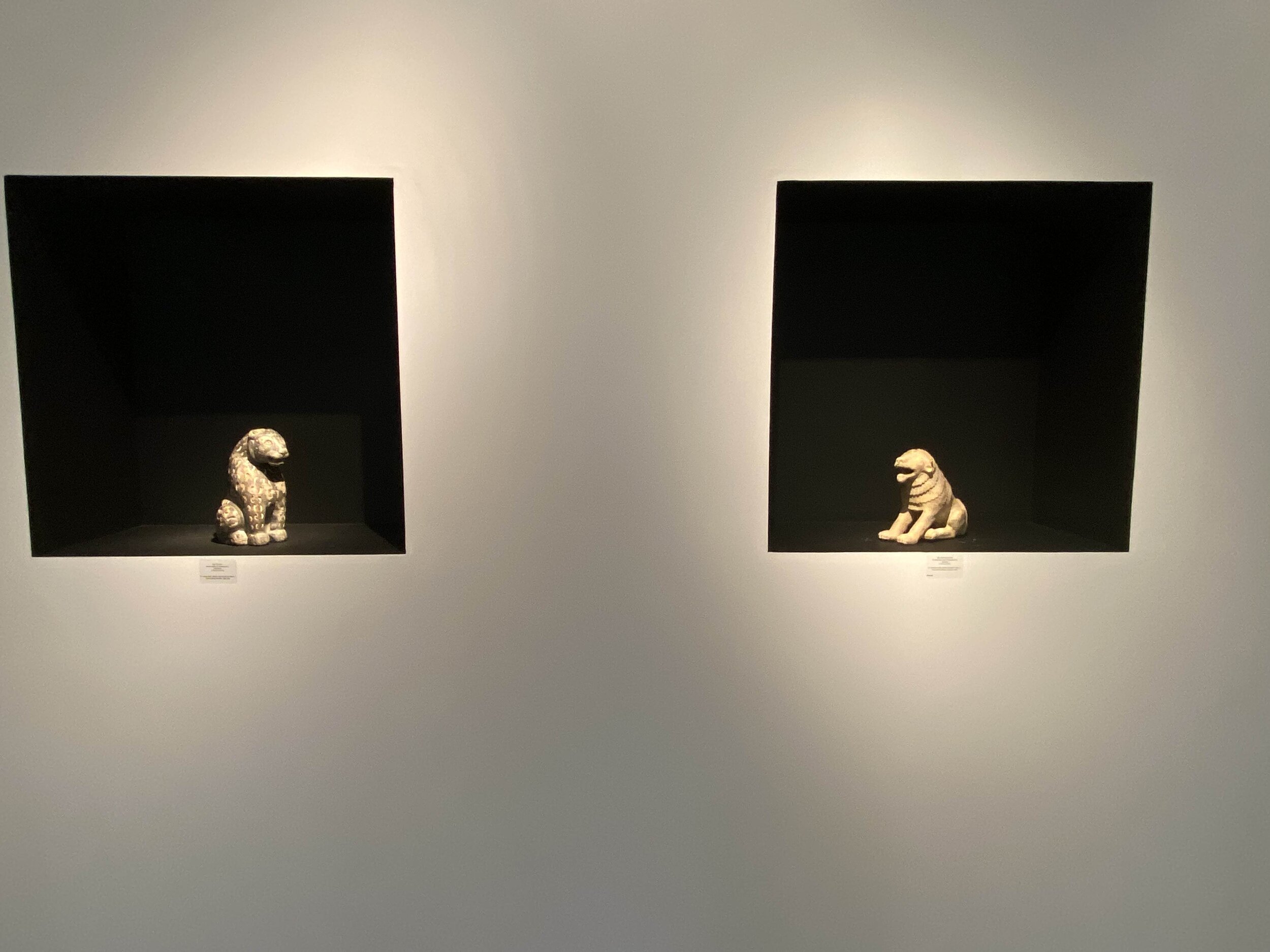

Sense and Sensibility

March 26 - May 14 2021

New York, NY

725 Fifth Avenue, 19th floor
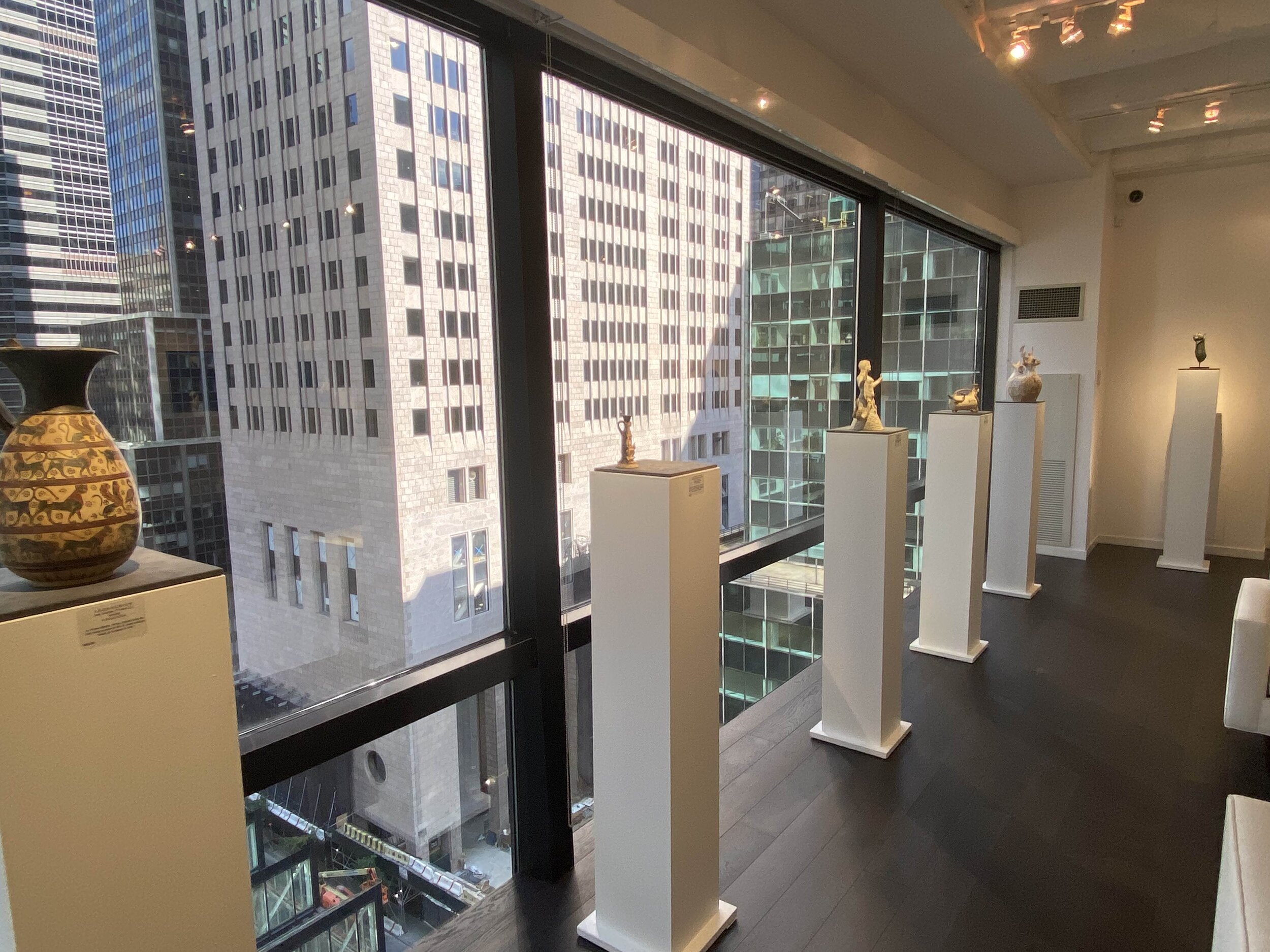

Merveilles de L’Antiquité

March 3 2020

Geneva, Switzerland

6, rue Verdaine


Salon Art + Design

November 14 - 18 2019

Park Avenue Armory, New York

Stand B7
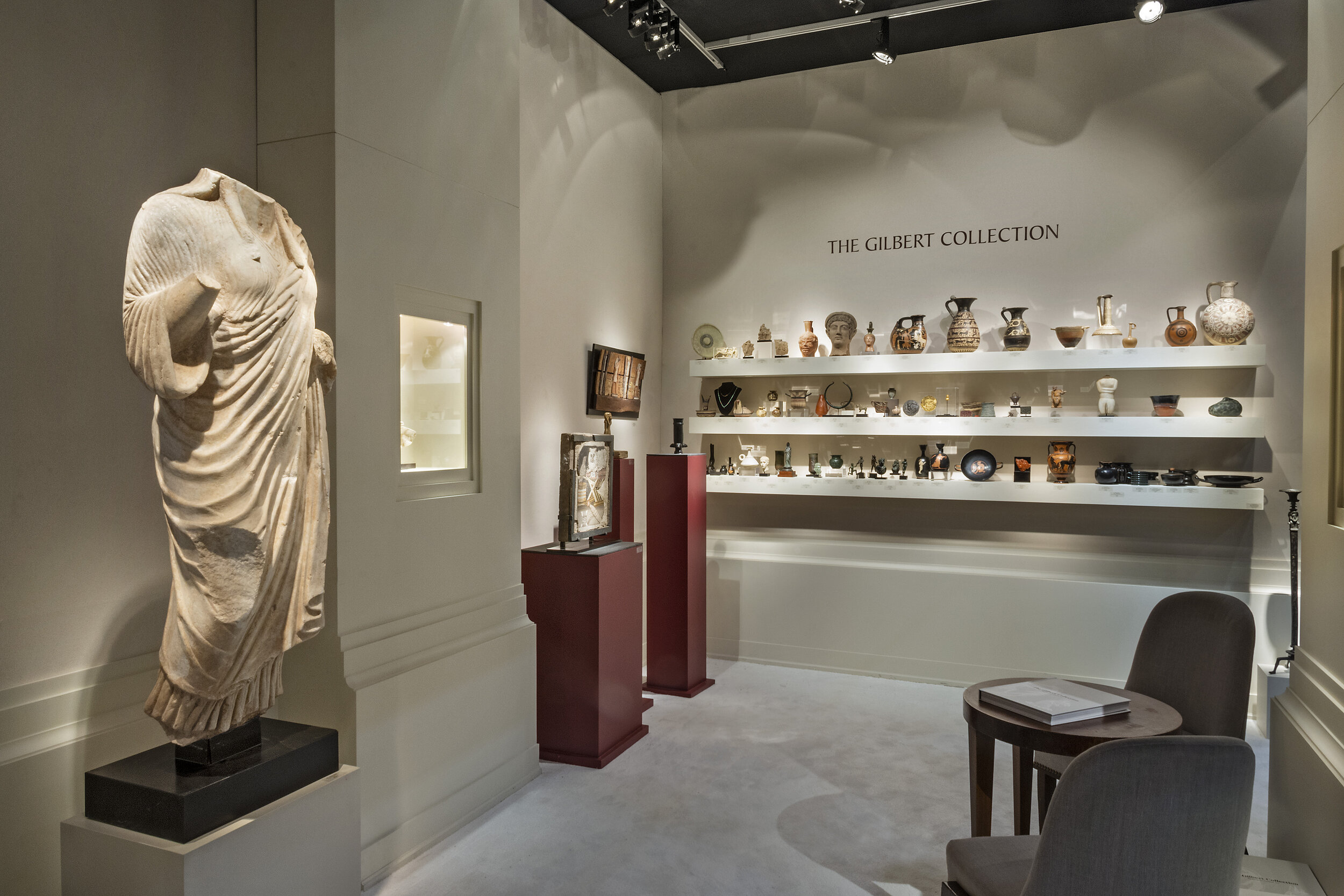

PAD London

September 30 - October 6 2019

Berkeley Square, London

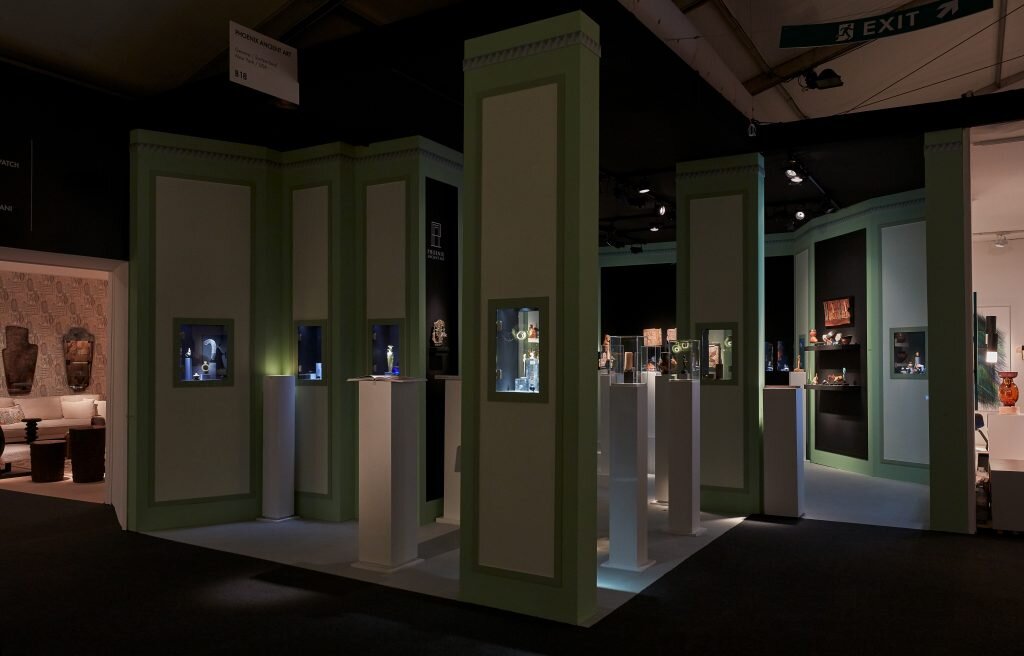
Stand B18
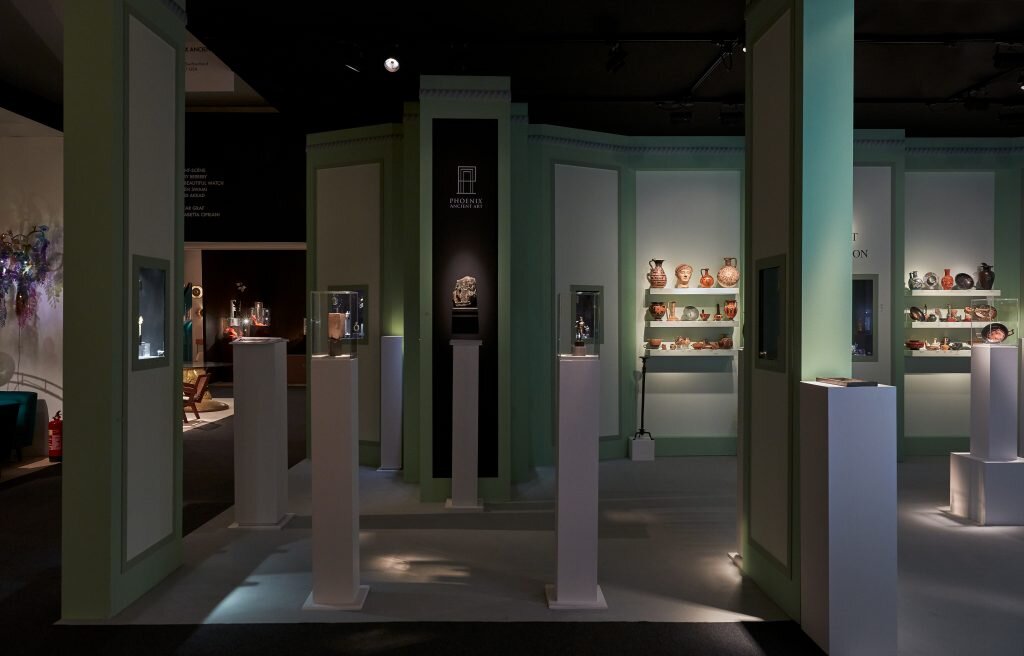

La Biennale

September 13 - 17 2019

Grand Palais, Paris

Stand A17
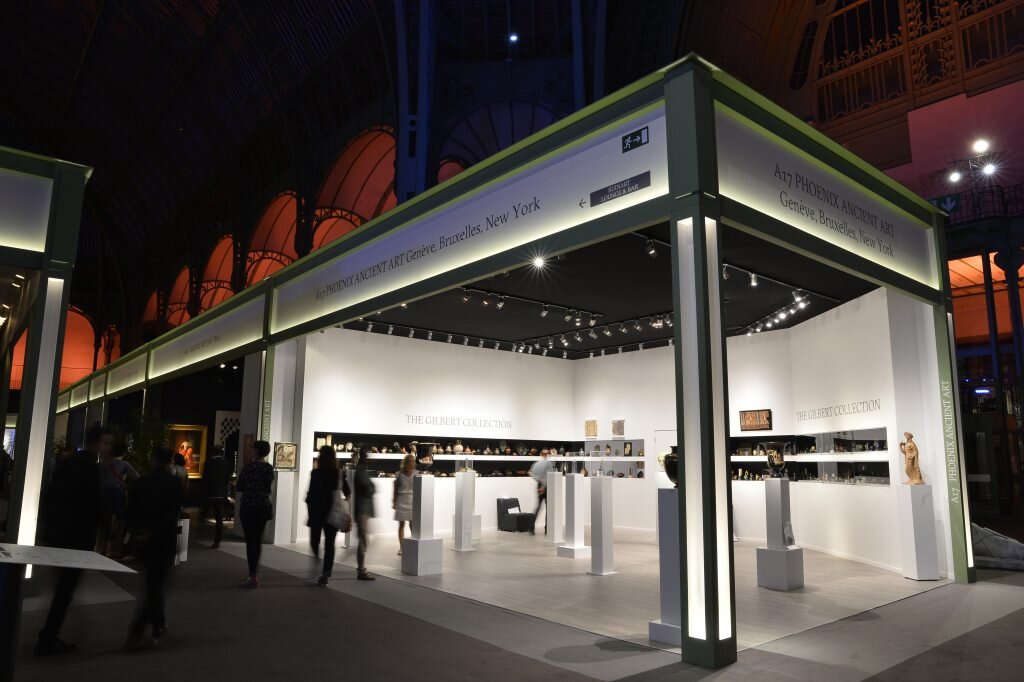
Uploaded by Phoenix Ancient Art on 2019-10-30.

Brussels Art Square

September 20 - 22 2019

Sablon, Brussels

17 Rue de la Régence
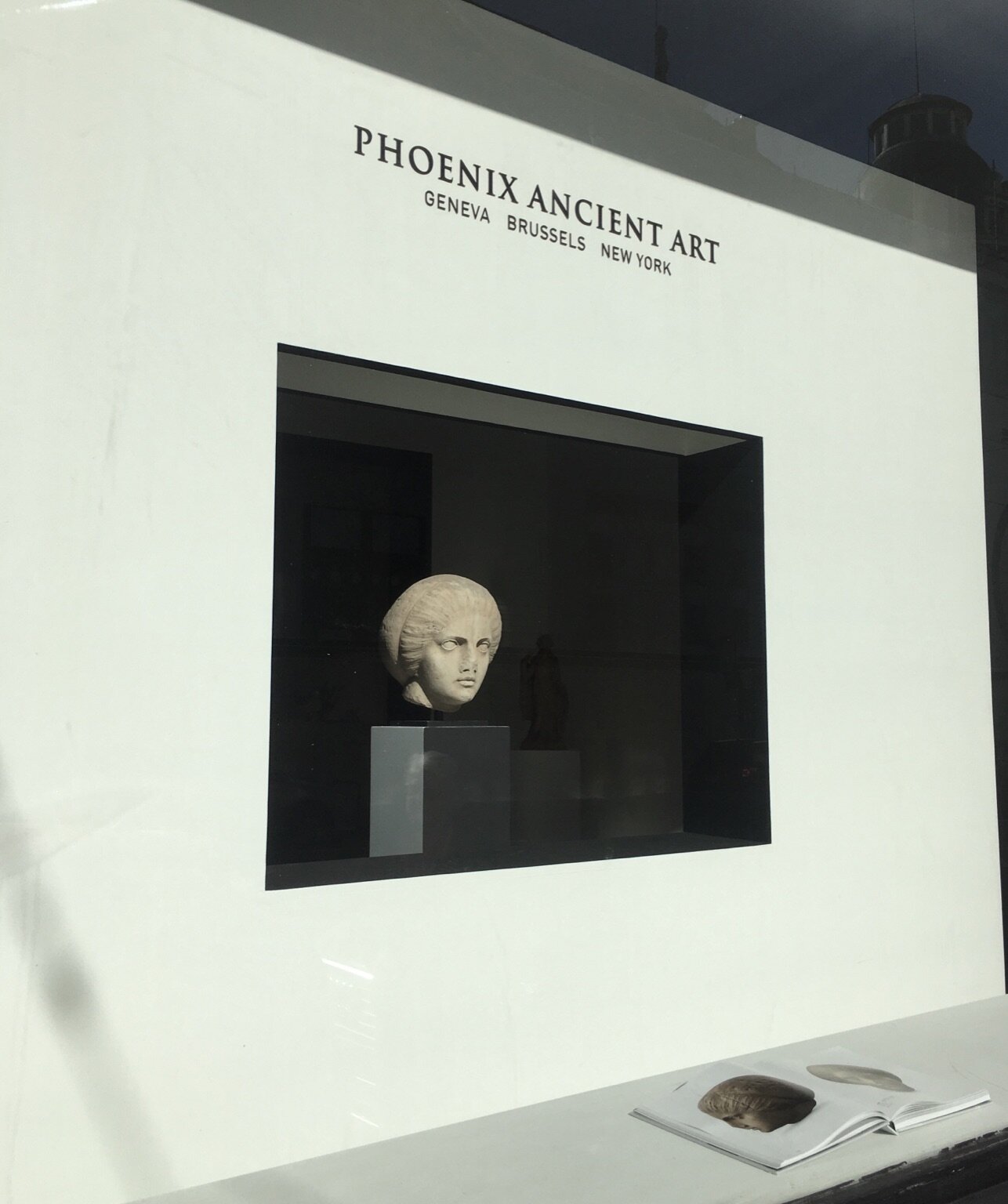

BAAF

The Brussels Ancient Art Fair

June 12 - 16 2019

Sablon, Brussels

17 Rue de la Régence
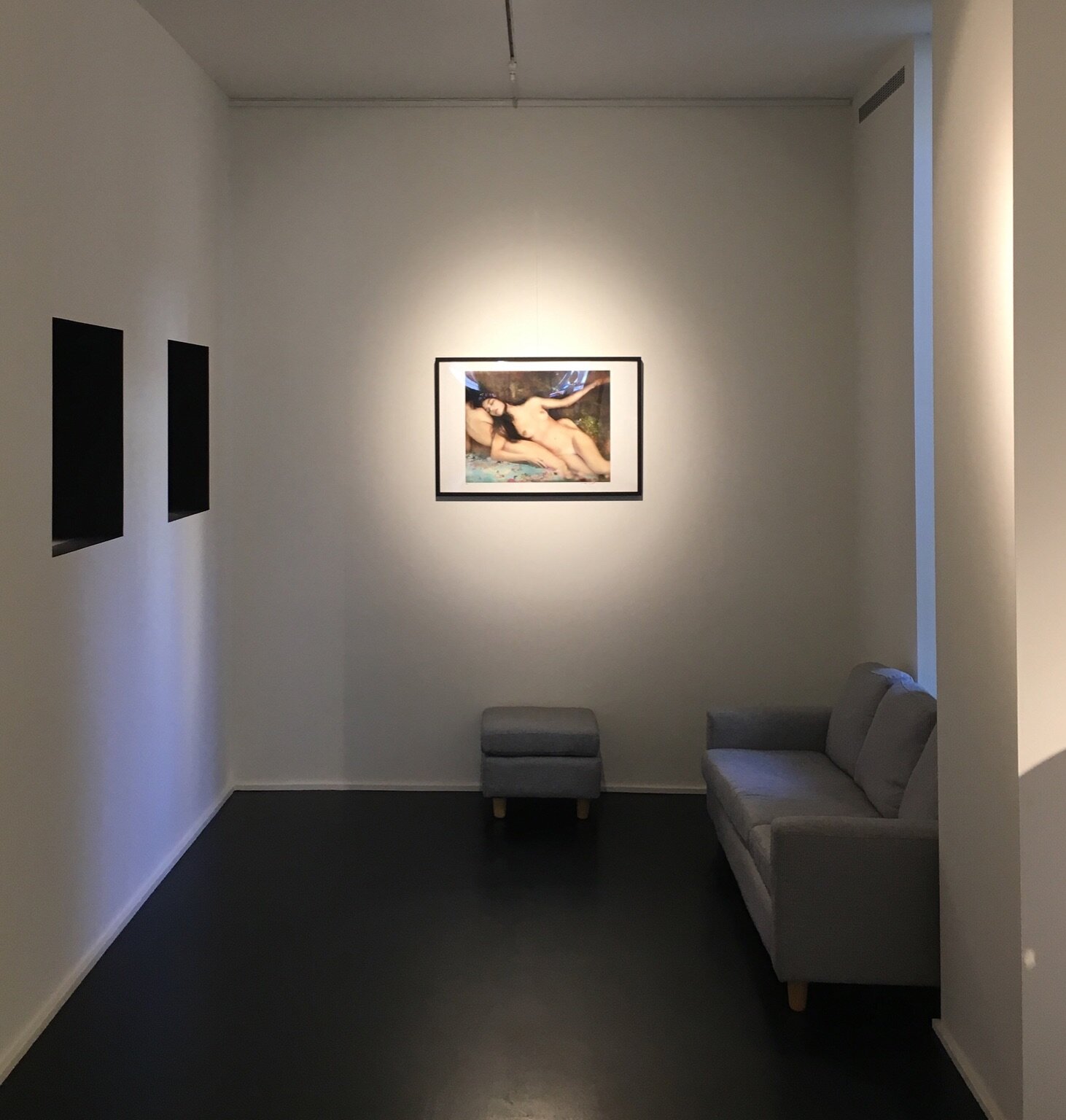

God of Wine

The World According to Dionysus

May 1 - 30 2019

New York, NY

47 East 66th Street
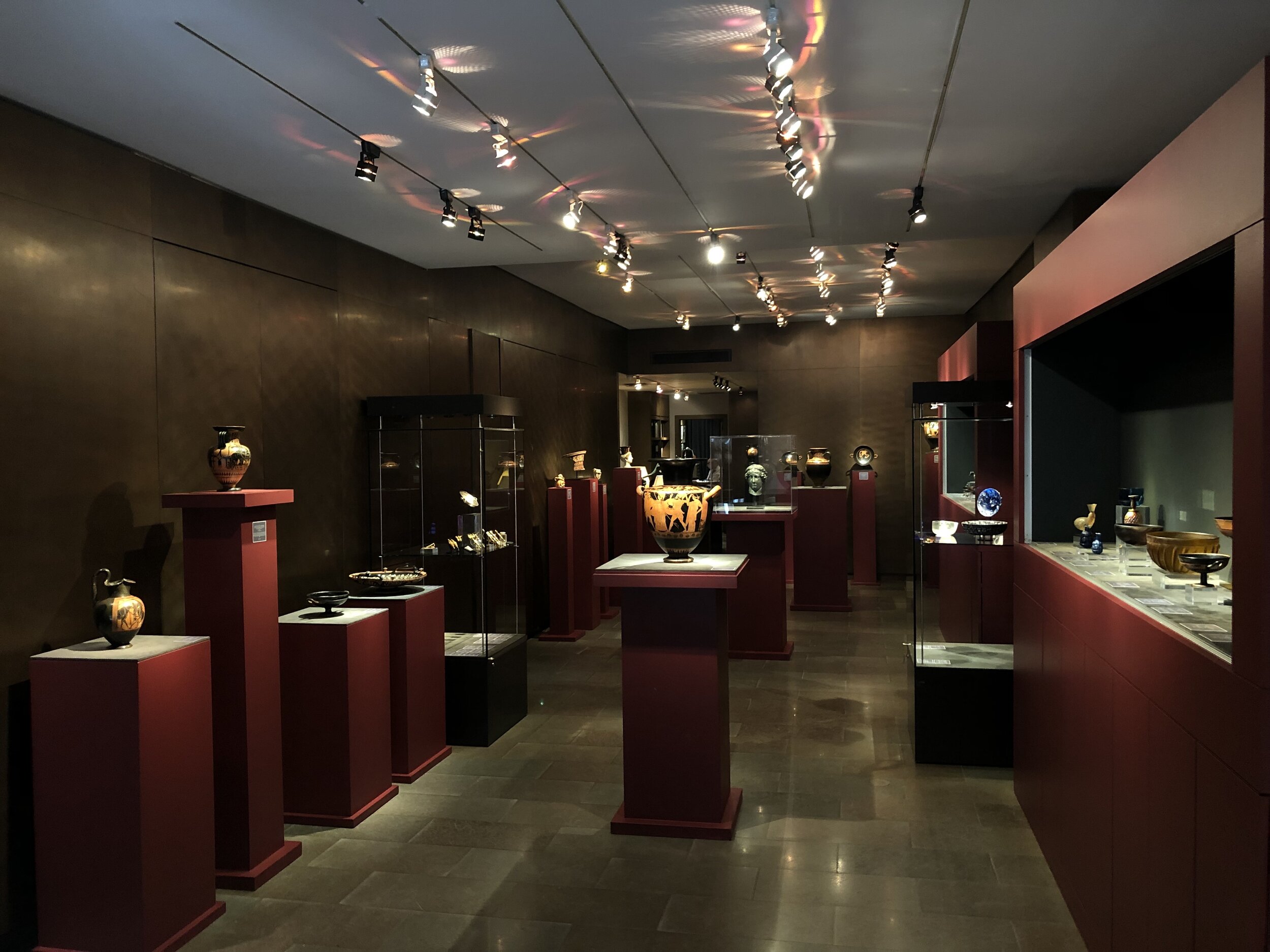

Regards Sur L’Antiqué

February 5 - May 3 2019

Geneva, Switzerland

6, rue Verdaine


PAD ART GENÈVE

January 31 - February 3 2019

Palexpo Genève

Stand 3


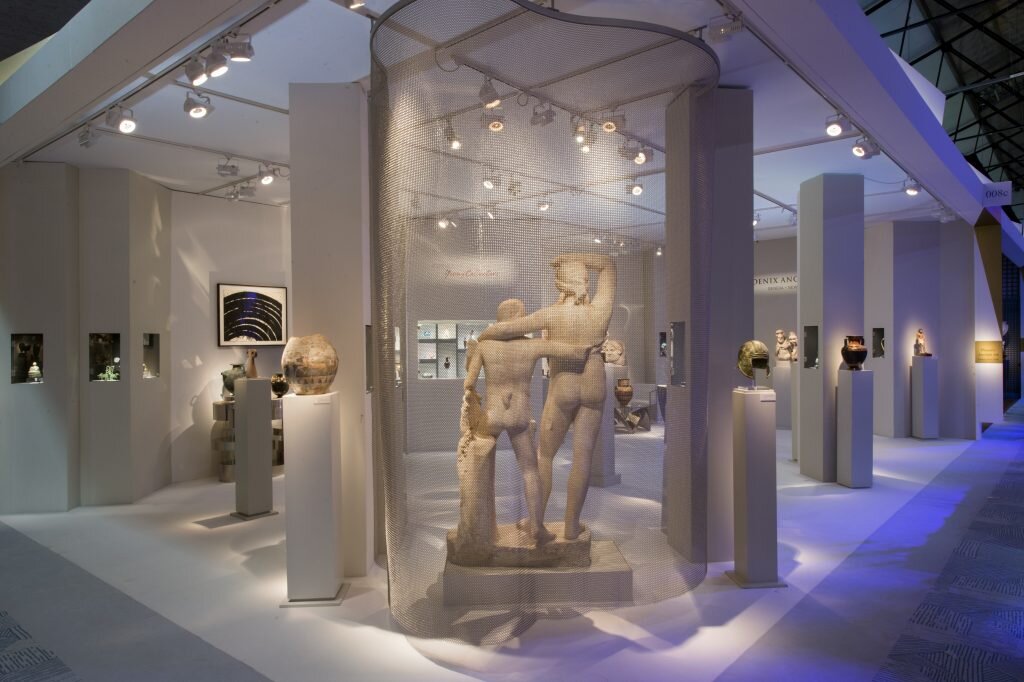
BRAFA

January 26 - February 3 2019

Tour & Taxis, avenue du Port 86 C

Stand 8C
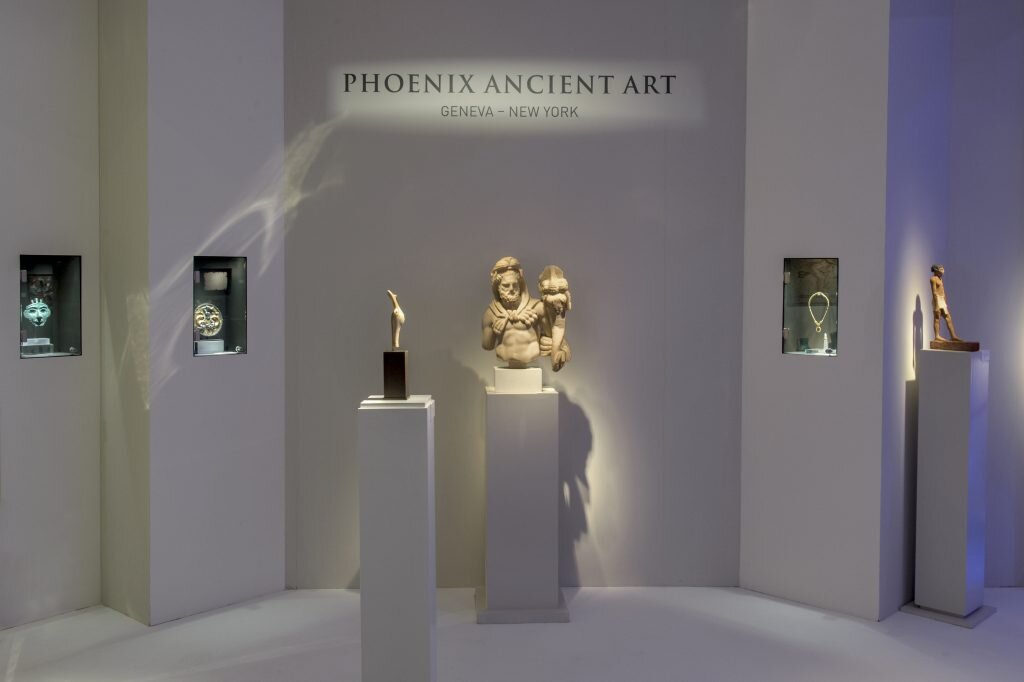

Salon Art + Design

November 8 - 12 2018

Park Avenue Armory, New York

Stand B5
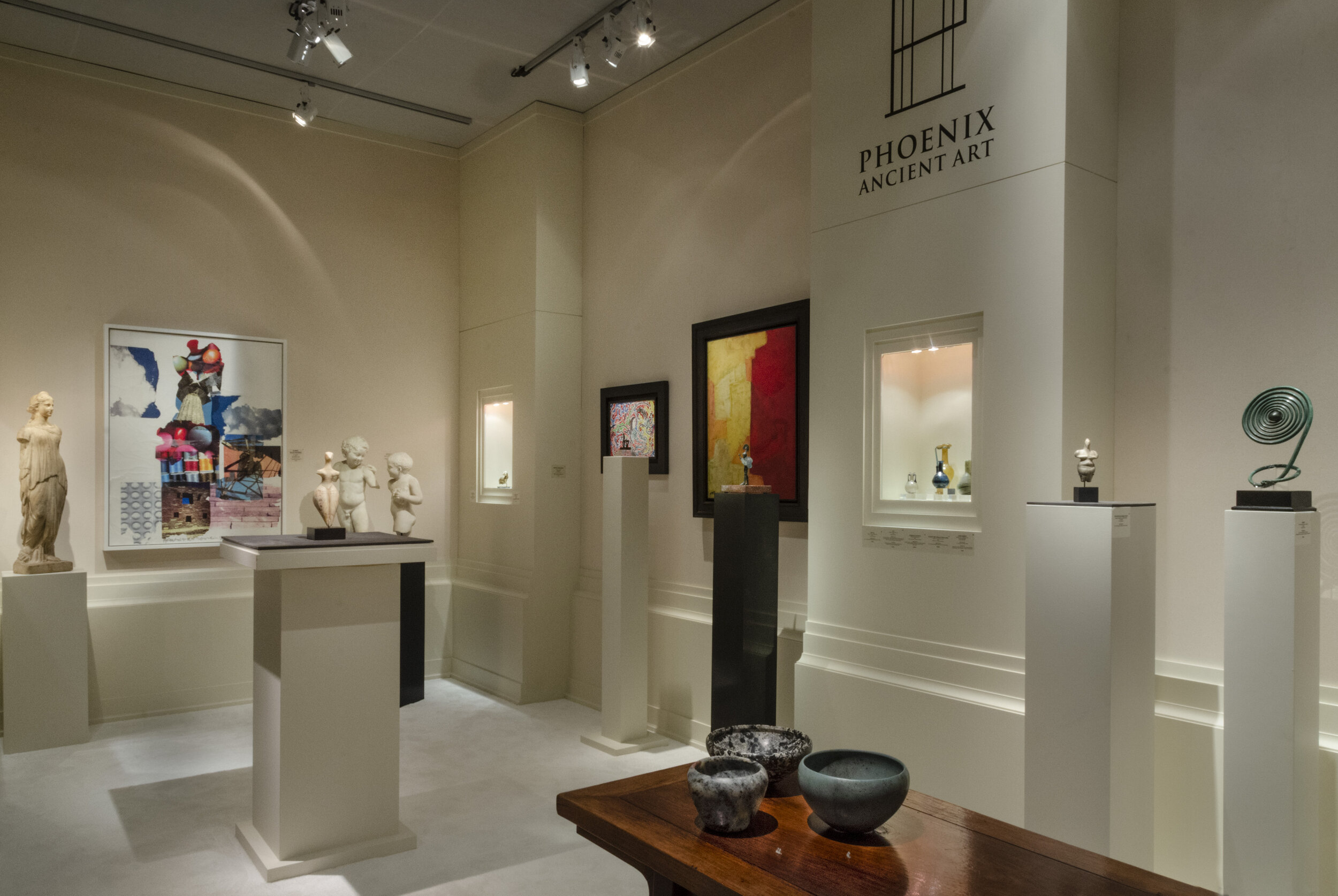

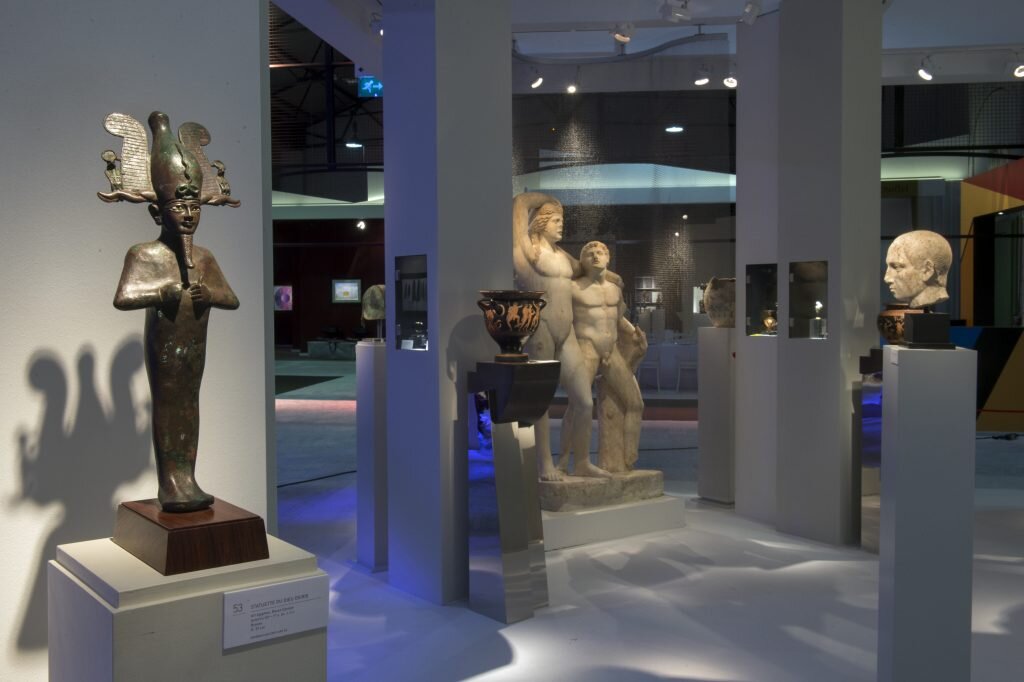
TEFAF

New York Fall

October 28 - November 1 2017

Park Avenue Armory, New York

Stand 73

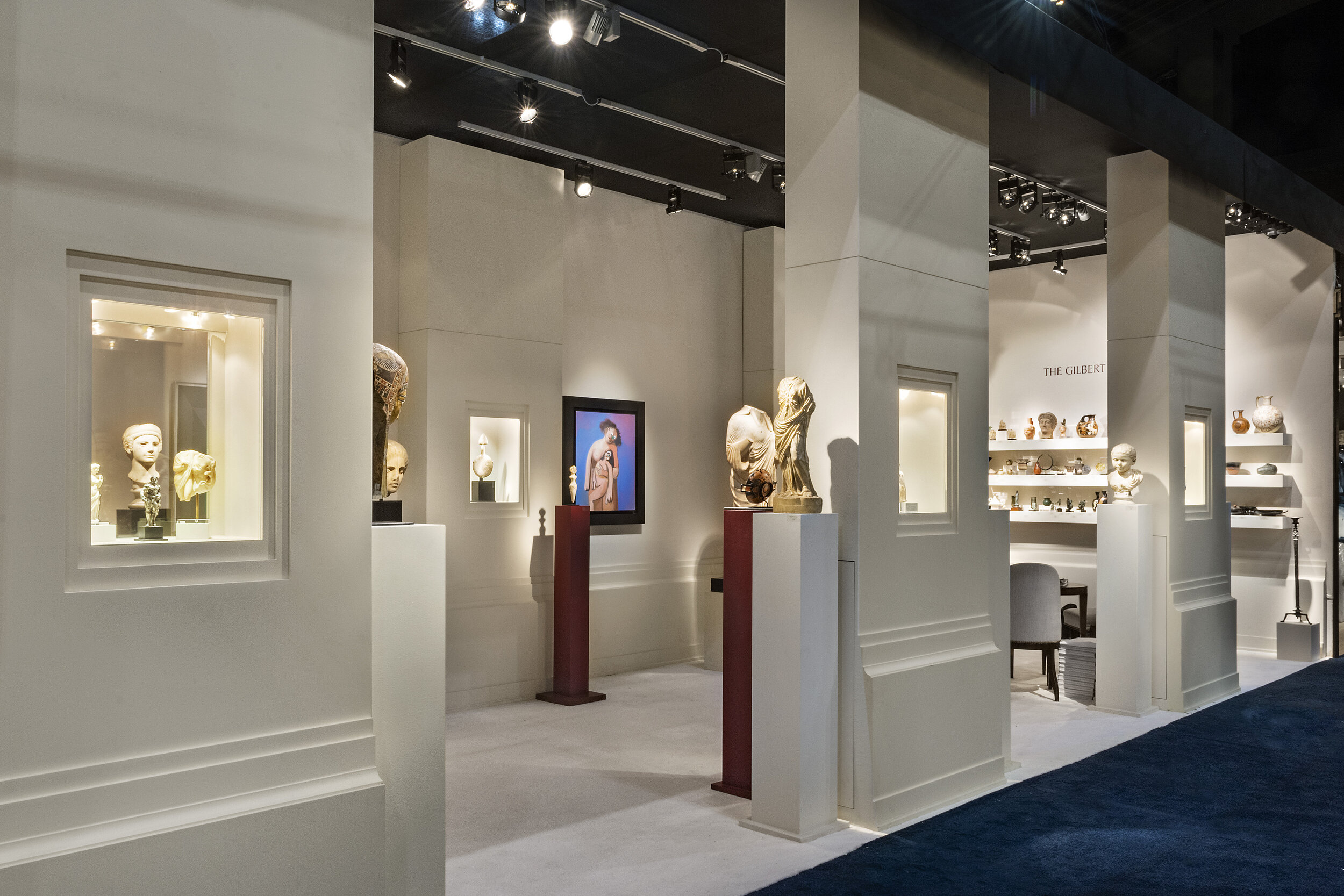
Hicham Aboutaam brings the Pantheon to TEFAF NY once again at the Park Avenue Armory, New York, October 28 - November 1- Phoenix Ancient Art Stand 73 New York, October 18, 2017 This October marks the second annual showing of the world renowned TEFAF FALL art fair in New York at the historical Park Avenue Armory.

"I found Rome a city of bricks, and left her a city of marble" the Roman historian Suetonius Tranquillus quoted Emperor Augustus. Ali Aboutaam says "this has...

Phoenix Ancient Art is pleased to present our Spring masters New York 2016 video, which features carefully selected works of art that were among the works on display at The Spring Masters New York Art Fair at the Park Avenue Armory in New York from May 6- 9. Booth A4. One of the stand out works presented here is a Hellenistic Marble Relief with the Daughters of Zeus (the Moirai, otherwise known as the fates Clotho (Spinner), Lachesis (Allotter), and Atropos (Inflexible) and Two Cupids (no.1) which was in the Nani Museum in the 18th century. Found on the island of Corfu, Greece in 1761 and purchased by the Venetian Jacopo Nani, this rare relief exhibits many details that point to Greek workmanship of the Hellenistic period, such as the proportions of the figures, hairstyles, garments and the design of the folds, all rendered with great precision. The most characteristic feature is the modeling of the relief and spatial arrangement: the background around the female figures differs in depths which allow us to clearly distinguish their parts and attributes and create the illusion of three dimensionality.

Phoenix Ancient Art is pleased to present our Spring masters New York 2016 video, which features carefully selected works of art that were among the works on display at The Spring Masters New York Art Fair at the Park Avenue Armory in New York from May 6- 9. Booth A4.


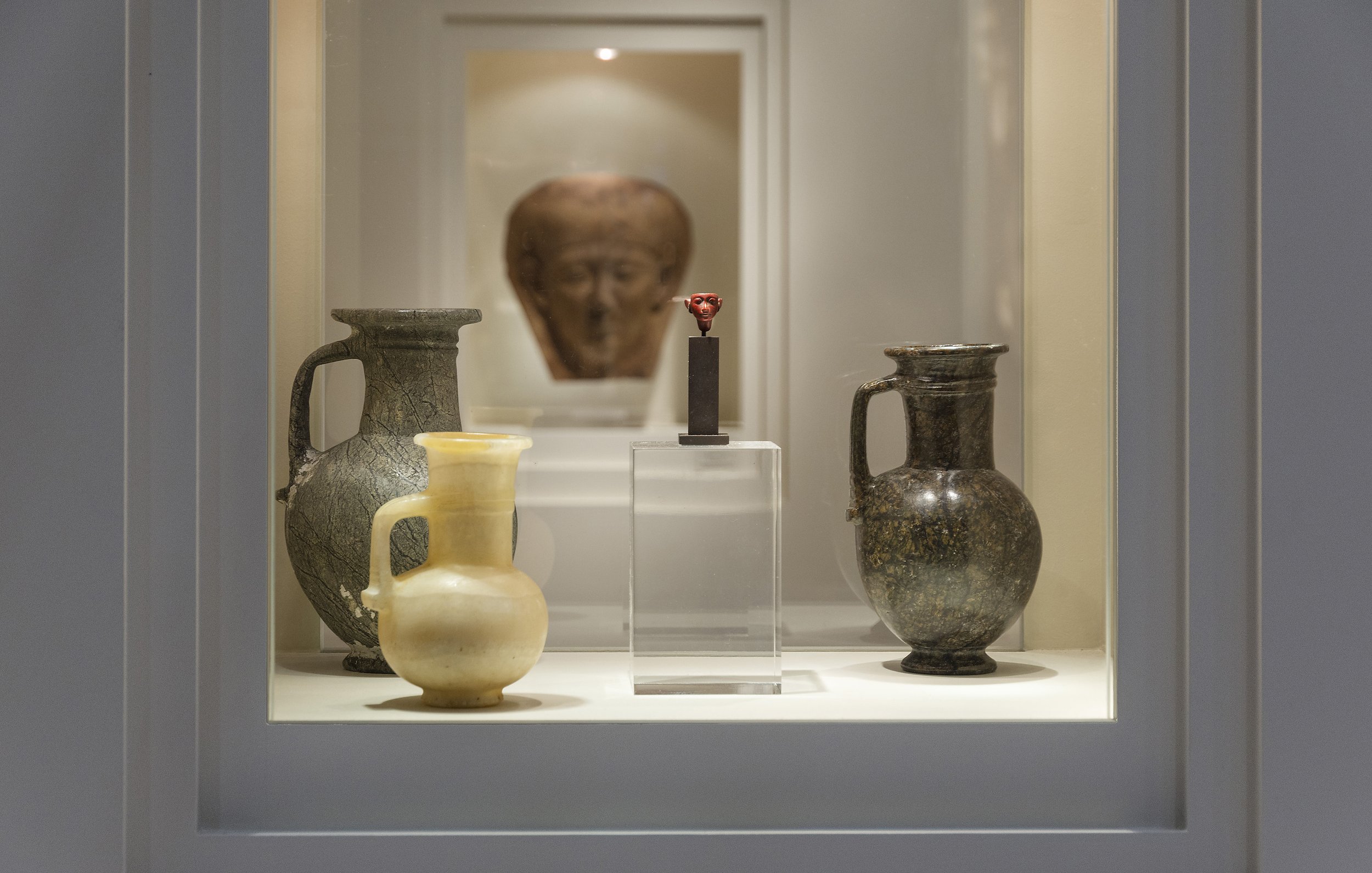
Phoenix Ancient Art is exhibiting at Spring Masters New York and the Park Avenue Armory for the second time. Among a stunning marble head of Aphrodite, Phoenix featured a wall of Egyptian vessels representing each Dynasty of Egypt. One vessel in particular was once in the Museum of Fine Arts in Boston back in 1903.

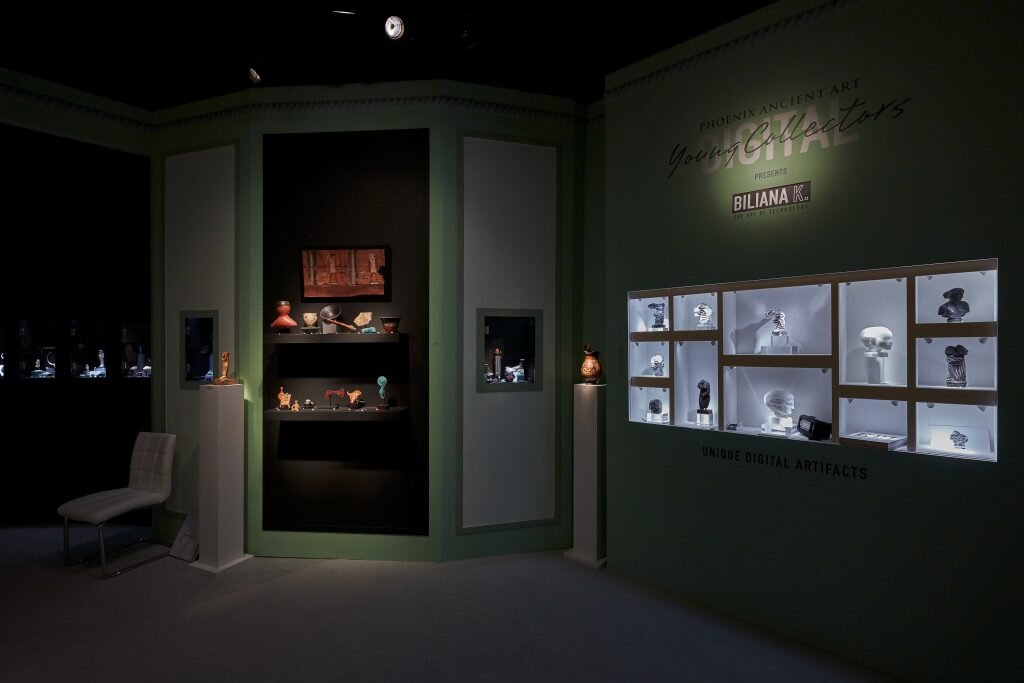
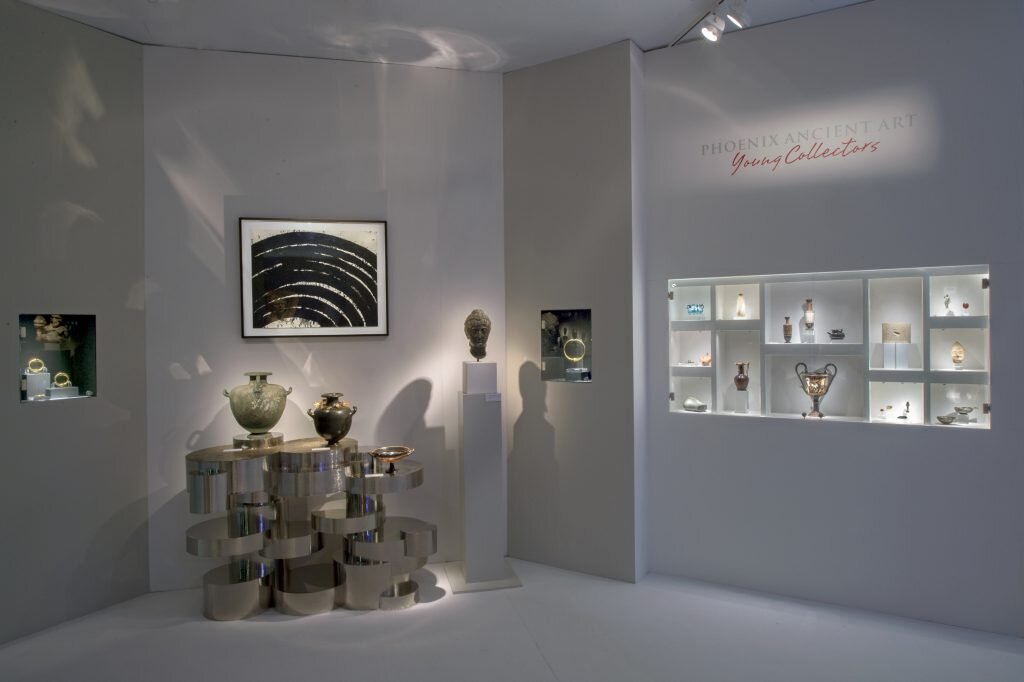
Phoenix Ancient Art's new gallery, Young Collectors, was featured in the Spring Masters New York 2015 art fair. There was an entire wall display attributed t...


BRONZE HERAKLES- The statuette is a masterpiece of ancient bronze casting. It is a work striking for both the beauty and the perfection in rendering of the human body: the naturalistic approach for the shapes is combined here with the knowledge of styles from the Classical period; the interest in details is stressed by employing additional techniques such as chiseling and inlaying. The figure represents Herakles, the most famous ancient Greek hero, in a dramatic moment of one of his labors – the right arm holding the club and raised high above the head is ready to slush, the right leg is advanced and bent at the knee, the torso is inclined forward following the same vigorous movement, the muscles of the entire body are rendered in great tension – everything showing the climax of combat before the hero’s victory over the adversary. The first things to discuss are the subject matter and the composition. What precisely is the depicted labor? Was it chosen from the canonic twelve deeds of Herakles, or from the stories telling additional adventures of the hero? Was this figure connected to another one to form a sculptural group, or were they merely set side by side? Was Herakles represented alone, leaving the spectator to guess at the subject matter and to imagine the complete story? The lion’s skin, the common attribute of Herakles along with his club and the bow, is not represented here in the usual way, bound around his shoulders, with a knot at the neck. This may suggest that the figure depicts the first labor, the fight with the Nemean lion; however, Herakles’ upward gaze, directed well above the lion’s figure, excludes this possibility. The remains of the shoulder and its position indicate that the arm was lowered and followed the diagonal line of the left leg, so the lion’s skin would be wrapped around the left hand as is attested to several similar compositions. Greek art explored at length the thematic range of Herakles labors, making it especially popular in vase painting and sculpture from the late 6th and continuing through the 5th century B.C. Herakles appears in the sculptural decoration of the friezes and metopes of Greek temples, where he is represented on the side of the gods and heroes struggling against the enemies or executing his deeds. Sometimes there was a direct political reason in choosing a particular episode among his labors. One such became the scene of Apollo and Herakles struggle for the Delphian tripod: the motive was associated in the early 6th century B.C. with the outcome of the First Sacred War. As the composition of the bronze figure does not indicate that Herakles might have held the tripod, the struggle with Apollo was not chosen for this representation. In studying the representations of Herakles’ labors from the point of view of their composition (keeping in mind the idea of the eye level of the figures and their interaction), the research should include the relief sculpture, because no sculpture in the round, especially the complete sculptural groups, survived from the Classical period. The metopes with Herakles and one of the mares of Diomedes from the temple of Zeus at Olympia (started in 456 B.C.) and the Hephaisteion in Athens (ca. 450 B.C.) appear to be the right choice. The arm holding the club is raised, the step is advanced; however closer comparison reveals the difference in the turn of the head: if we imagine that the bronze Herakles held the bridle in his left hand, the head is turned back and does not look at the mare. The frieze of the temple of Apollo in Bassae (420-400 B.C.) shows a similar pose, but reversed, of Herakles fighting against the Amazon Hippolyta, who is represented opposite him. This demonstrates that the statuette, although referring to the iconographic schemes in group arrangements in Greek Classical art, does not copy them in a precise way. As the statuette does not show any trace of a connection to a joint figure in the composition, we can conclude that the bronze was designed as a single figure. This idea is supported by the fact that, although the figure received complete three-dimensional modeling, the main position (the head seen strictly in profile while the torso is frontal) is sufficient to recognize the action. This particularity of the composition is typical for Greek statuary of the Severe style and found in few surviving bronze pieces in the round of about 460 B.C.: the statue of Zeus/Poseidon from the Cape Artemision (Athens, National Archaeological Museum) and the statuette of Herakles from Mantinea (the Louvre). The male body type and the proportions are similar: a strong body build with broad shoulders, pectoral, and broad waist are characteristic. The structure is also defined by the strong, well-trained muscles of the back, buttocks, and legs.

DIONYSUS- The fine, idealized face, and the elaborate hair-style, show a youthful and effeminate image of Dionysos that appeared in Greek art in the second h...

Contrary to the hair, the face is entirely preserved, without damage. The surface of the bronze is smooth, clean and dark-colored, almost black. The neck is ...

Phoenix Ancient Art in the 2013 International Fine Art and Antiques Dealers show at the park avenue armory in New York.

The impact of the size of this monumental mosaic is reinforced by the superb polychromatic sense conveyed by its tesserae which contribute to its very lively character. That polychromatic effect is further enhanced by the innovative depiction of cast shadows. The composition is divided into the two principal zones consisting of a square panel in the center surrounded on all sides by a framing element in the form of a frieze in which smaller figures are involved in activities associated with viniculture. One’s attention is immediately arrested by the magnificent central rectangle, its visual impact effected by the use of tesserae of myriad colors which contributes to its polychromatic explosion of visual effects. The composition is designed as two vignettes, artfully divided by the compositional use of the grape vine. On the right, two men stand face to face. The bearded figure on the right who is wearing a short, gray-colored tunic, holds a charger onto which his companion places a bunch of grapes. His white tunic is masterfully ornamented. This group is captioned, under their feet, in Greek with the phrase, kaloi karpoi, the beautiful fruit. The larger vignette depicts a second pair of figures, oriented at a ninety degree angle to the vignette just described. The larger of the two figures in this vignette is seated on a bough around which two vines are intertwined. He is shown wearing a short tunic, held in place at the right shoulder by a round fibula, or safety pin. There is a Greek inscription below this figure, eikarios, happy. He extends his left hand toward a figure wearing a red tunic, who presents him with a covered vessel. Whereas some would interpret the seated figure as either a personification of the spirit of an individual who is “happy” because of the wine being offered in the covered vessel, others would see this individual as the owner of the villa and its vineyards. Whereas both interpretations may have merit, they overlook the fact that this composition, with its two pairs of figures, is in fact a mirror image of a subject attested in Room 27 of the Roman Imperial Villa at Casale, outside of Piazza Armerina, in Sicily. This mosaic depicts the famous episode in Book 9 of Homer’s Odyssey in which Odysseus and his men are trapped within the cave of Polyphemus, the one-eyed giant Cyclops. Odysseus, the undisputed master of all stratagems, concocts a plan whereby he offers wine to Polyphemus, who, never experiencing this delightful gift of Dionysos before in his life, becomes intoxicated and eventually passes out. Odysseus and his companions are then able to blind this giant and make their escape by clinging to the bellies of his flock. The owner of the mosaic under discussion and the mosaicist must have collaborated on the choice of the subject matter and must have consciously referred to a now lost Hellenistic original of this particular episode of The Odyssey. The caption, Happy, beneath the seated figure in this vignette of the central panel alludes not to any individual figure, but to the felicitous state imparted to the drinker by the wine, which offers release from any number of circumstances, both real and imagined. The mosaic now takes on added importance because it is the second, after the mosaic at Casale, known monumental reflection of what must be a now lost Hellenistic original painting. The transmission of this lost original may have been due to the use of pattern books, whose use is again suggested by the elements of the vignettes in this mosaic’s frieze with their reliance on Erotes which frame this central panel.


Warrior Ancient Arms and Armor Millennia before history ever recorded a military victory or defeat, arms and armor played a primary role in the success or failure of human groups, societies, and civilizations. It is Homer's Iliad, dating to the 8th century B.C., which provides us with one of the earliest surviving accounts of ancient warfare, and the warriors that made it possible.

PHOENIX ANCIENT ART TO SHOW EARLY FAIENCES A spectacular exhibition of ancient pieces of faience from the private collection of the Aboutaam family will be o...

Hicham Aboutaam and Phoenix Ancient Art exhibit at the annual International Fine Art and Antique Dealers Show. Featuring pieces such as the Greek Bronze Kour...


Phoenix Ancient Art exhibiting at the Biennale in Paris France

Hicham Aboutaam and Phoenix Ancient Art exhibiting at the Biennale des Antiquaires in Paris, France.

Hicham Aboutaam and Phoenix Ancient Art exhibiting at the Salon du Collectionneur in Paris, France